Basset Hound Health Problems: What Every Owner Should Know
Basset Hound health problems cluster around the spine, hips, ears, and eyes — organ systems shaped by this breed's distinctive long body, short legs, and heavy ear flaps. As a chondrodystrophic hound, the Basset carries FGF4 retrogenes linked to over fifty times the odds of Hansen Type I intervertebral disc disease compared with non-carrier breeds, while Orthopedic Foundation for Animals data places hip dysplasia in roughly one in three evaluated dogs. Large-scale veterinary studies report that ear-related consultations account for more than twenty-three percent of Basset Hound visits, and the ACVO Blue Book confirms inherited glaucoma predisposition. Basset Hound common diseases cited below, and planning across Basset Hound lifespan, inform this veterinarian-reviewed BreedRisk guide.
Most Common Health Conditions in Basset Hounds
Intervertebral Disc Disease
Intervertebral disc disease (IVDD) occurs when discs between the vertebrae degenerate or herniate, compressing the spinal cord and causing pain, weakness, or paralysis. Basset Hounds are homozygous for FGF4 retrogenes on chromosomes 12 and 18; the CFA12 retrogene is associated with 51.23 times higher odds of Hansen Type I IVDD compared with non-carrier breeds. Histopathological disc degeneration can be present before one year of age, with a median surgical presentation age of 6.1 years. Sudden back or neck pain, reluctance to jump, or hind-limb weakness warrant urgent veterinary assessment.
Hip Dysplasia
Hip dysplasia develops when the hip joint forms abnormally, leading to looseness, cartilage wear, and progressive arthritis. OFA hip screening reports a 37.4% abnormal rate in Basset Hounds based on 198 evaluations, ranking the breed 13th among 147 evaluated breeds, with zero percent achieving an Excellent rating. Signs typically emerge between one and four years of age and include stiffness after rest, reluctance to exercise, and a swaying or bunny-hopping gait. OFA certification radiographs at 24 months support early diagnosis and management.
Otitis Externa
Otitis externa is inflammation of the outer ear canal, commonly caused by bacteria, yeast, or allergies. Basset Hounds have long, heavy ear flaps that restrict airflow, creating a warm, moist environment where infections thrive. A large-scale Finnish veterinary database study found that 23.1% of Basset Hounds (34 of 147) presented for ear-related consultations, with 19.7% prescribed topical ear medications. Signs include head shaking, scratching at the ears, redness, discharge, and odour. Regular ear cleaning with a vet-approved solution supports prevention.
Glaucoma
Glaucoma occurs when fluid pressure builds inside the eye, damaging the optic nerve and causing progressive vision loss. The ACVO Blue Book confirms Basset Hounds as predisposed to both primary closed angle glaucoma (PCAG) and primary open angle glaucoma (POAG), with POAG linked to a mutation in the ADAMTS17 gene. Onset typically occurs between two and eight years of age. Early signs include redness, cloudiness, squinting, visible eye enlargement, and sudden vision changes. Intraocular pressure measurement and ophthalmology referral are recommended when eye changes appear.
Health Risks by Age for Basset Hounds
Based on genetic IVDD research, OFA screening data, and peer-reviewed studies cited on this page.
| Age Range | Conditions to Watch | Why This Age Matters | Vet Action Recommended |
|---|---|---|---|
| 0–1 years | Hip dysplasia (developmental); otitis externa; IVDD (early disc changes) | Rapid growth and joint formation; heavy ear flaps predispose to early ear disease; histopathological IVDD changes may begin before one year | Wellness orthopaedic examination; ear checks at every visit; maintain healthy weight; avoid repetitive jumping during growth |
| 1–4 years | Hip dysplasia; otitis externa; patellar and joint strain from low stature | OFA data cluster hip dysplasia concern in early adulthood; ear infections peak when activity and environmental exposure increase | OFA hip radiographs at 24 months; otoscopic examination if head shaking or discharge; weight management |
| 3–8 years | Intervertebral disc disease; glaucoma | Median IVDD surgical age 6.1 years; glaucoma onset commonly between two and eight years per breed registry data | Urgent assessment for back pain or hind-limb weakness; intraocular pressure checks if eye changes noted; ophthalmology referral when indicated |
| 8+ years | IVDD recurrence risk; secondary arthritis; glaucoma progression | Cumulative spinal and joint wear; chronic ear disease may persist; vision loss affects quality of life in senior years | Pain management for arthritis and spinal disease; senior wellness bloodwork; quality-of-life assessment |
Symptoms to Watch For
Contact your veterinarian promptly if you notice any of the following signs in your Basset Hound.
- Crying or yelping when picked up, hunched posture, reluctance to jump, or hind-limb weakness that may indicate intervertebral disc disease.
- Stiffness after rest, reluctance to climb stairs, or a bunny-hopping gait that may indicate hip dysplasia.
- Frequent head shaking, scratching at the ears, redness, dark or yellow discharge, or unpleasant odour that may indicate otitis externa.
- Redness or cloudiness in one or both eyes, squinting, visible eye enlargement, or bumping into objects that may indicate glaucoma.
- Sudden vision loss, pawing at the eye, or sensitivity to light that warrants same-day ophthalmic evaluation for glaucoma.
Basset Hound Breed Profile
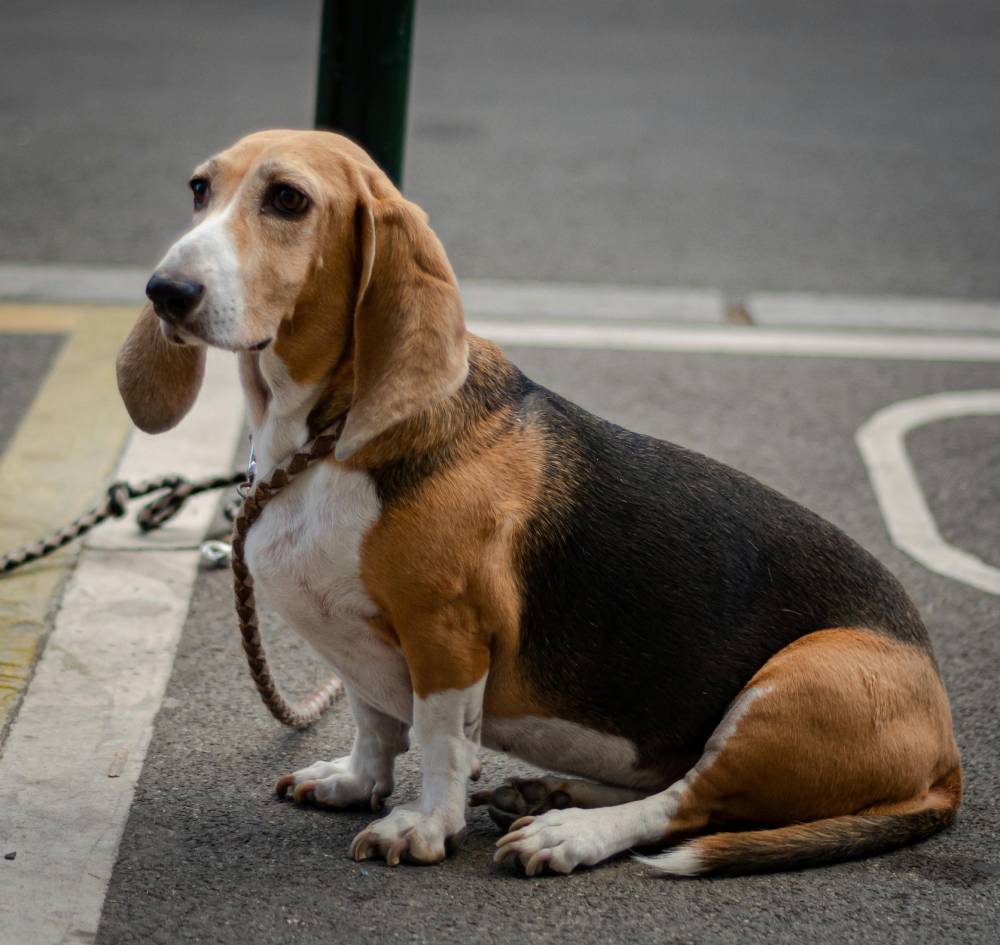
- Breed group: Hound
- Life span: 10 – 12 years
- Weight: 20 – 35 kg (44 – 77 lbs)
- Height: 33 – 38 cm (13 – 15 in)
- Temperament: Friendly, Easygoing, Loyal, Patient, Devoted, Gentle
- Bred for: Scent hunting, trailing hare and rabbit
- Origin: France, Belgium
Research Sources
All health data on this page is drawn from peer-reviewed veterinary studies and official registry references.
- Dickinson PJ & Bannasch DL (2020). Current Understanding of the Genetics of Intervertebral Disc Degeneration. Frontiers in Veterinary Science, 7:431. https://doi.org/10.3389/fvets.2020.00431
- Orthopedic Foundation for Animals (OFA). Hip Dysplasia Statistics. https://www.ofa.org/diseases/hip-dysplasia/
- Kaimio et al. (2017). Survey of otitis externa in American Cocker Spaniels in Finland. Acta Veterinaria Scandinavica. https://doi.org/10.1186/s13028-017-0282-3
- ACVO & OFA. Ocular Disorders Presumed to be Inherited in Purebred Dogs (ACVO Blue Book). 2024. https://ofa.org/wp-content/uploads/2025/08/ACVO-Blue-Book-2024.pdf
Read our full guide: IVDD in Dogs — What Every Owner Should Know
Frequently Asked Questions
What are the most common health problems in Basset Hounds?
Basset Hounds are most significantly predisposed to intervertebral disc disease (IVDD), hip dysplasia, otitis externa, and glaucoma. As a chondrodystrophic breed, Basset Hounds carry FGF4 retrogenes associated with over 51 times the odds of Hansen Type I IVDD compared to non-carrier breeds. Hip dysplasia affects around 37% of Basset Hounds evaluated by the OFA, ranking the breed 13th among all evaluated breeds. Discuss your dog's individual risk with your veterinarian.
Are Basset Hounds prone to back problems?
Yes — Basset Hounds are a chondrodystrophic breed, meaning their characteristic short legs and long body are linked to the same FGF4 retrogenes that cause premature intervertebral disc degeneration. Research shows these retrogenes are associated with over 51 times the odds of Hansen Type I IVDD compared to non-carrier breeds, with histopathological evidence of disc degeneration present before 1 year of age. The median age at surgical presentation is 6.1 years. Discuss your dog's individual risk with your veterinarian.
Why do Basset Hounds get so many ear infections?
Basset Hounds have long, heavy ear flaps that restrict airflow into the ear canal, creating a warm, moist environment where bacteria and yeast thrive. A large-scale study found that ear-related consultations accounted for 23.1% of all Basset Hound veterinary visits, with nearly 20% of dogs prescribed topical ear medications. Onset can occur as early as 1 year of age. Regular ear cleaning with a vet-approved solution is an important preventive measure. Discuss your dog's individual risk with your veterinarian.
Do Basset Hounds get glaucoma?
Yes — Basset Hounds are predisposed to both primary open angle glaucoma and primary closed angle glaucoma, both confirmed as inherited conditions in the breed. Primary open angle glaucoma in Basset Hounds is linked to a mutation in the ADAMTS17 gene. Glaucoma causes fluid pressure to build up inside the eye, damaging the optic nerve and leading to progressive vision loss. Early detection through regular eye checks is critical. Discuss your dog's individual risk with your veterinarian.
How long do Basset Hounds live?
Basset Hounds typically live between 10 and 12 years. Their predisposition to serious conditions such as IVDD and hip dysplasia means that proactive management — including weight control, avoiding high-impact exercise, and regular vet checks — is important for maintaining quality of life throughout their lifespan. Discuss your dog's individual risk with your veterinarian.
Get a personalised health forecast for your Basset Hound based on age, sex, and lifestyle.
Run the Free Health Forecast