Border Collie Health Risks — What Every Owner Should Know
Border Collie health risks are important to understand because this highly active herding breed has several inherited conditions documented in veterinary literature. Current sources identify key concerns including hip dysplasia, inherited epilepsy predisposition, collie eye anomaly, and neuronal ceroid lipofuscinosis risk alleles. These findings do not mean every Border Collie will develop disease, but they indicate where owners and veterinarians should focus preventive monitoring. Border Collie health problems, Border Collie common diseases named in those registries, and monitoring across Border Collie lifespan are summarised below. All content on this page is DVM-reviewed and based on peer-reviewed studies and official screening registries.
Most Common Health Conditions in Border Collies
Hip Dysplasia
Hip dysplasia is a developmental orthopedic disorder where the hip joint forms abnormally, increasing the likelihood of pain and long-term joint degeneration. OFA registry data reports a dysplastic rate of approximately 10.8% in Border Collies, and Swedish prevalence data also confirms measurable population burden. Early orthopedic assessment helps identify affected dogs during their developmental years.
Epilepsy Predisposition
Border Collies are identified in epilepsy consensus literature as a breed with evidence suggesting inherited epilepsy. Clinical presentation often begins in young adulthood and can include recurrent seizure episodes separated by normal intervals. Breed predisposition status supports proactive neurologic history-taking and early veterinary evaluation when seizure-like events are observed.
Collie Eye Anomaly (CEA)
Collie eye anomaly is an inherited congenital ocular disorder affecting structures in the back of the eye. Border Collies are listed as a predisposed breed in ACVO inherited-eye references. Some dogs may show subtle visual deficits early, while others are identified only through specialist ophthalmic examination, making breed-aware screening valuable in young dogs.
Neuronal Ceroid Lipofuscinosis (NCL)
Neuronal ceroid lipofuscinosis is an inherited neurodegenerative disorder associated with progressive neurological dysfunction. Border Collie population data reports a measurable mutant allele frequency, indicating established genetic presence within the breed. Clinical concern generally centers on progressive behavioral, visual, motor, and seizure-related neurologic changes in younger to middle-aged affected dogs.
Health Risks by Age for Border Collies
Based on peer-reviewed evidence and registry-supported breed data.
| Age Range | Conditions to Watch | Why This Age Matters | Vet Action Recommended |
|---|---|---|---|
| 0–1 years | Collie eye anomaly (CEA) | CEA is congenital and often identified early in life through specialist eye exam | Early ophthalmic screening and discussion of inherited eye risk in puppies |
| 1–3 years | Hip dysplasia (developmental), idiopathic epilepsy onset window | Developmental orthopedic signs and first seizure presentations frequently emerge in young adults | Orthopedic exam with imaging when indicated; neurologic workup for seizure-like episodes |
| 2–5 years | Neuronal ceroid lipofuscinosis (NCL) | NCL-related neurologic changes are often noted in young to middle-aged affected dogs | Neurologic assessment and discussion of DNA-based inherited-risk screening |
| 5+ years | Ongoing orthopedic and neurologic monitoring | Cumulative wear and progression of existing neurologic disorders can impact quality of life | Routine follow-up with mobility and neurologic reassessment at regular wellness visits |
Symptoms to Watch For
Contact your veterinarian promptly if you notice any of the following signs in your Border Collie.
- Hind-limb stiffness, gait asymmetry, or reduced willingness to jump that may indicate hip dysplasia.
- Recurrent seizure episodes, collapse, or post-episode confusion that may indicate idiopathic-epilepsy.
- Cloudy eye appearance, low-light hesitation, or navigation issues that may indicate collie eye anomaly.
- Progressive behavioral change, declining coordination, and seizure activity that may indicate NCL.
Border Collie Breed Profile
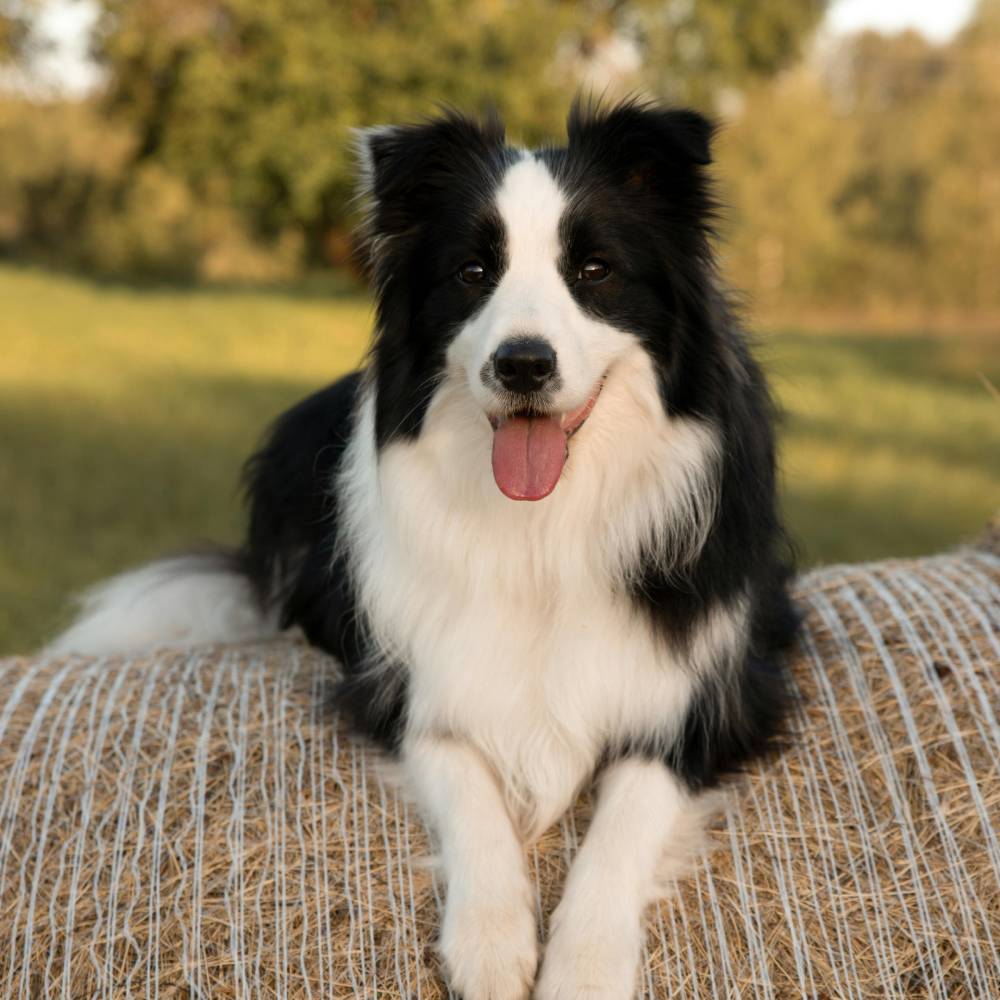
- Breed group: Herding
- Life span: 12 – 15 years
- Weight: 14 – 20 kg (30 – 45 lbs)
- Height: 46 – 56 cm (18 – 22 in)
- Temperament: Intelligent, Energetic, Alert, Loyal
- Bred for: Herding livestock
- Origin: Anglo-Scottish border region
Research Sources
All health data on this page is drawn from peer-reviewed veterinary studies and official registry datasets.
- OFA Hip Dysplasia Statistics — Border Collie, 20,863 evaluations.
- Engdahl et al. 2026 — Veterinary Record — hip and elbow dysplasia prevalence in Sweden.
- Berendt et al. 2015 — IVETF Consensus Report — s12917-015-0461-2.
- ACVO Blue Book 2024 — Collie Eye Anomaly.
- Maki et al. 2022 — Animals 12:1647 — NCL allele frequency.
Read our full guide: Epilepsy in Dogs: Breeds, Signs, and What Vets Look For
Frequently Asked Questions
Are Border Collies prone to hip dysplasia?
OFA hip registry data indicates that roughly 1 in 9 Border Collies evaluated show hip dysplasia, so orthopedic monitoring is important from early adulthood. Discuss your dog's individual risk with your veterinarian.
Does the Border Collie have inherited epilepsy risk?
Border Collie is listed in epilepsy consensus literature as a breed with evidence suggesting inherited epilepsy, with most clinical concern appearing in young to adult dogs. Discuss your dog's individual risk with your veterinarian.
Which eye and neurologic conditions should Border Collie owners watch for?
Key inherited concerns include collie eye anomaly and neuronal ceroid lipofuscinosis, so early ophthalmic and neurologic awareness is important if visual, behavioral, or coordination changes appear. Discuss your dog's individual risk with your veterinarian.
Get a personalised health forecast for your Border Collie based on age, sex, and lifestyle.
Run the Free Health Forecast