Boxer Health Risks — What Every Owner Should Know
Boxer health risks are shaped by this breed's working build, brachycephalic head type, and inherited disease profile. Peer-reviewed and registry data identify elevated concern for arrhythmogenic and dilated cardiomyopathy, degenerative myelopathy risk alleles, lymphoma predisposition, mild-to-moderate BOAS burden, and hip dysplasia. These risks do not mean every Boxer will become ill, but they do define the conditions owners should monitor from early adulthood onward. Boxer health problems, Boxer common diseases reflected in those datasets, and follow-up across Boxer lifespan are presented next. All health content on this page is DVM-reviewed and sourced from published veterinary literature and official screening datasets.
Most Common Health Conditions in Boxers
Cardiac Disease (ARVC / DCM)
Boxers are a recognized cardiac-risk breed for rhythm disturbances and myocardial disease, including patterns consistent with arrhythmogenic right ventricular cardiomyopathy and dilated cardiomyopathy phenotypes. OFA advanced cardiac screening data reports an approximately 6% abnormal or carrier rate in evaluated Boxers, supporting moderate population risk and the need for proactive cardiac surveillance from mid-life.
Degenerative Myelopathy (DM / SOD1)
Degenerative myelopathy is a progressive spinal cord disorder associated with the SOD1:c.118G>A variant. Boxer population studies report high mutant allele frequency, indicating substantial inherited risk even though clinical expression varies between individuals. Most affected dogs develop signs later in life, often beginning with subtle hind-limb weakness and nail scuffing before progressing.
Lymphoma / Mast Cell Tumour Predisposition
Cancer is a major mortality driver in Boxers, with published breed-level mortality analysis reporting 38.5% of deaths attributed to neoplasia. Boxers are overrepresented for both lymphoma and mast cell tumours in comparative datasets. This places oncology vigilance at the center of routine Boxer wellness planning, especially from middle age onward.
Brachycephalic Obstructive Airway Syndrome (BOAS)
Although usually less severe than in extreme brachycephalic breeds, Boxers still show measurable BOAS burden in cross-breed grading studies. Reported Boxer distribution suggests predominantly mild grades, with roughly one in five showing some airway obstruction. Clinical impact is often exercise and heat intolerance rather than dramatic airway crises.
Hip Dysplasia
OFA hip registry data indicates approximately 10.9 to 11.0% dysplastic findings in evaluated Boxers, consistent with moderate developmental orthopedic risk. Early-onset signs can include gait asymmetry, reluctance to jump, and exercise intolerance in young adults. Later progression may contribute to chronic osteoarthritic pain and reduced mobility.
Health Risks by Age for Boxers
Based on peer-reviewed evidence and OFA screening statistics.
| Age Range | Conditions to Watch | Why This Age Matters | Vet Action Recommended |
|---|---|---|---|
| 1–3 years | Hip dysplasia (developmental), mild BOAS signs | Orthopedic development and airway tolerance are usually established in this window | Orthopedic exam with hip imaging when indicated; baseline airway assessment for exercise or heat intolerance |
| 4–7 years | Cardiac disease progression (ARVC/DCM phenotype), ongoing BOAS burden | The screened cardiac abnormality signal rises from early middle age in this breed | Routine auscultation and consideration of echocardiogram/Holter based on exam findings |
| 7–10 years | Lymphoma or mast cell tumour concern, cardiac progression, early DM signs | Cancer and neurologic risk become more clinically relevant in mature adults | Prompt workup for new masses or unexplained weight loss; neurologic exam for hind-limb weakness |
| 10+ years | Degenerative myelopathy progression, chronic cardiac disease, age-related mobility decline | Cumulative disease expression and frailty increase in senior Boxers | Senior exams every 6 months with mobility, respiratory, and cardiovascular monitoring |
Symptoms to Watch For
Contact your veterinarian promptly if you notice any of the following signs in your Boxer.
- Exercise intolerance, fainting, collapse, or unexplained cough that may indicate cardiac disease.
- Laboured breathing, loud respiratory noise, or heat intolerance that may indicate BOAS.
- Persistent or enlarging skin masses and swollen lymph nodes that may indicate lymphoma or mast cell disease.
- Hind-limb weakness, toe scuffing, or progressive gait instability that may indicate degenerative myelopathy.
- Reluctance to jump, stiffness after activity, or hip discomfort in young dogs that may indicate hip dysplasia.
Boxer Breed Profile
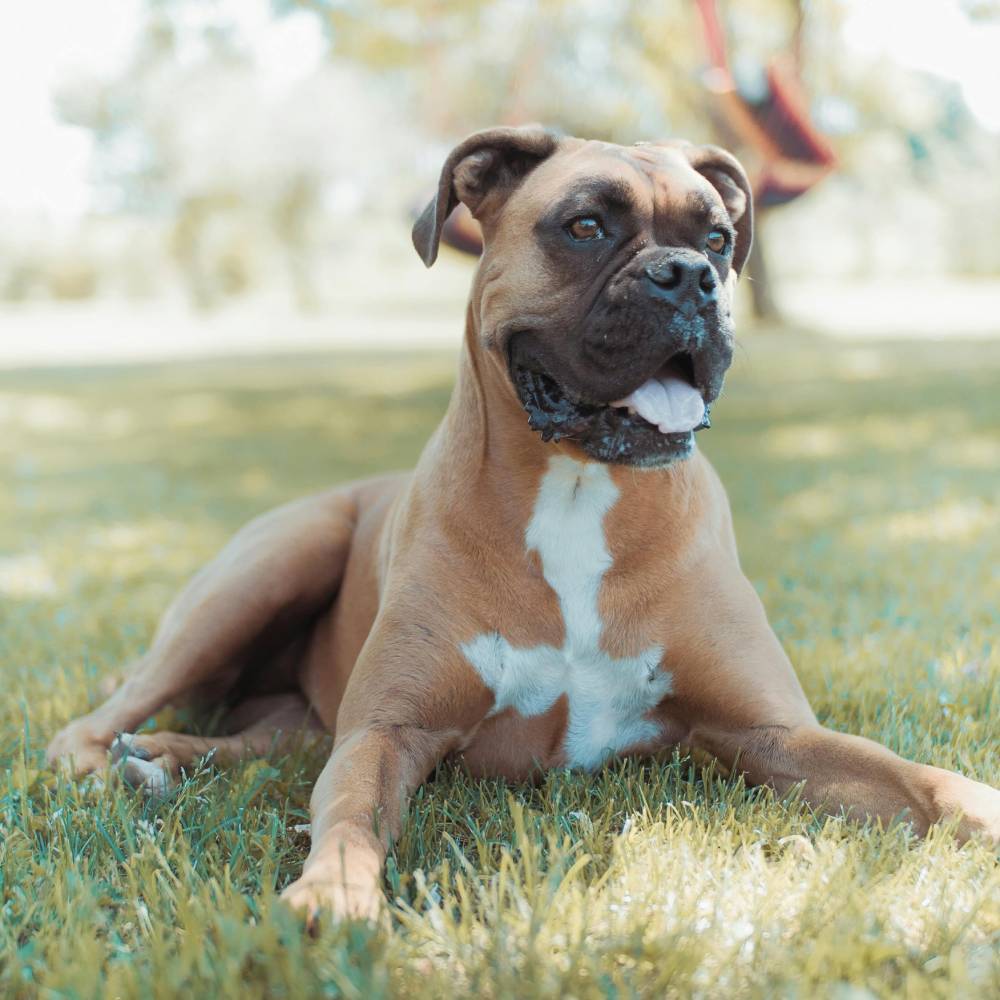
- Breed group: Working
- Life span: 10 – 12 years
- Weight: 25 – 32 kg (55 – 70 lbs)
- Height: 53 – 63 cm (21 – 25 in)
- Temperament: Loyal, Playful, Energetic, Intelligent
- Bred for: Hunting, guarding, and working
- Origin: Germany
Research Sources
All health data on this page is drawn from peer-reviewed veterinary studies and official registry datasets.
- Dobson JM (2013). Breed-Predispositions to Cancer in Pedigree Dogs. ISRN Veterinary Science.
- OFA Advanced Cardiac Disease Statistics Report — Boxer, Rank 36, 2,402 evaluations, 6% abnormal/carrier rate.
- OFA Hip Dysplasia Statistics — Boxer, 5,221 evaluations, 10.9–11.0% dysplastic.
- Pohl et al. (2025) — PLOS ONE, cross-sectional study of BOAS across 14 brachycephalic breeds, Figure 3.
- Maki et al. (2022) — Animals 12:1647; Holder et al. (2014) — BMC Veterinary Research 1:10 — SOD1:c.118G>A allele frequency in Boxers.
Read our full guide: Epilepsy in Dogs: Breeds, Signs, and What Vets Look For
Frequently Asked Questions
What heart disease risk do Boxer dogs have?
OFA advanced cardiac screening data reports that around 6% of Boxers screened showed cardiac abnormalities, which supports a moderate inherited risk profile in this breed. Discuss your dog's individual risk with your veterinarian.
Are Boxers at risk for degenerative myelopathy?
Boxers are considered a high-risk breed for degenerative myelopathy due to a high reported frequency of the SOD1 risk allele in population studies, with most clinical cases appearing later in life. Discuss your dog's individual risk with your veterinarian.
Which Boxer symptoms should be treated as urgent?
Urgent signs include fainting, collapse, laboured breathing, rapidly worsening exercise intolerance, or sudden severe lameness, as these can indicate major cardiac, airway, or orthopedic problems in this breed. Discuss your dog's individual risk with your veterinarian.
Get a personalised health forecast for your Boxer based on age, sex, and lifestyle.
Run the Free Health Forecast