Shih Tzu Health Risks — What Every Owner Should Know
Shih Tzu health risks deserve early planning because this toy brachycephalic breed combines airway crowding, exposed corneal anatomy, and spinal vulnerability in a compact body type. Published cross-sectional BOAS data report substantial airway obstruction burden, while primary-care epidemiology confirms elevated corneal ulcer risk and historic hospital analyses identify increased IVDD predisposition versus many other breeds. Endocrine references also list Shih Tzu among hypothyroidism-predisposed dogs, making gradual weight gain an important signal rather than a cosmetic issue. These findings do not mean every Shih Tzu will become sick, but they do define practical monitoring priorities for owners and veterinarians across life stages. Using this evidence helps families focus on breathing quality, eye comfort, spinal mobility, and body condition trends at routine checkups. The goal is practical vigilance without unnecessary alarm for families. Shih Tzu health problems, Shih Tzu common diseases cited in the references, and follow-up across Shih Tzu lifespan are organised in the sections that follow. All information on this page is sourced from peer-reviewed or official veterinary references and reviewed by Dr. Paulo Morouço, DVM.
Most Common Health Conditions in Shih Tzus
Brachycephalic Obstructive Airway Syndrome (BOAS)
BOAS reflects narrowing and crowding of upper-airway structures in short-faced dogs, increasing breathing effort during excitement, heat, or exercise. In multi-breed brachycephalic cohort data, Shih Tzus showed a combined burden of grade 1 and grade 2 obstruction near fifty percent, supporting high surveillance priority in young to adult dogs.
Intervertebral Disc Disease (IVDD)
IVDD occurs when intervertebral discs degenerate or herniate, compressing spinal cord structures and causing pain, weakness, or gait changes. Large multicenter hospital analyses identify Shih Tzu among breeds with significantly elevated IVDD risk, and later genetic-pathology research supports the biological basis for this predisposition in chondrodystrophic phenotypes.
Corneal Ulcerative Disease
Corneal ulcerative disease affects the transparent front layer of the eye and can progress from superficial irritation to deeper defects. VetCompass primary-care prevalence data report Shih Tzu among the most affected breeds, with markedly higher risk than crossbred dogs, consistent with the breed's prominent globes and shallower orbital support.
Metabolic Weight Risk
Merck endocrine references list Shih Tzu among breeds predisposed to hypothyroidism, where reduced thyroid activity can present with weight gain before broader systemic signs. Because small dogs can gain body fat quickly relative to frame size, routine body-condition scoring is clinically useful for early detection of trend changes.
Health Risks by Age for Shih Tzus
Based on curated breed-risk windows aligned with cited studies and registry references.
| Age Range | Conditions to Watch | Why This Age Matters | Vet Action Recommended |
|---|---|---|---|
| 1–3 years | BOAS, early corneal irritation | Respiratory and ocular signs often emerge in young adults as activity and environmental exposure increase | Airway-focused exam and prompt ophthalmic checks for squinting, tearing, or cloudiness |
| 3–8 years | IVDD risk window, ongoing ocular disease | Disc degeneration risk rises and recurrent eye-surface injury can become clinically significant | Neurologic and orthopedic assessment for back pain or gait change; repeat eye exams as needed |
| 4–10 years | Metabolic weight and endocrine monitoring | Hypothyroidism-associated weight trends are commonly tracked in mature adulthood | Body-condition scoring at wellness visits and endocrine screening when weight shifts without diet change |
Symptoms to Watch For
Contact your veterinarian promptly if you notice any of the following signs in your Shih Tzu.
- Noisy breathing, exercise intolerance, or heat distress that may indicate BOAS.
- Back pain, reluctance to jump, or hind-limb weakness that may indicate IVDD.
- Squinting, tearing, redness, or cloudy eye patches that may indicate corneal ulcerative disease.
- Steady weight gain without increased intake that may indicate metabolic or thyroid-related risk.
Shih Tzu Breed Profile
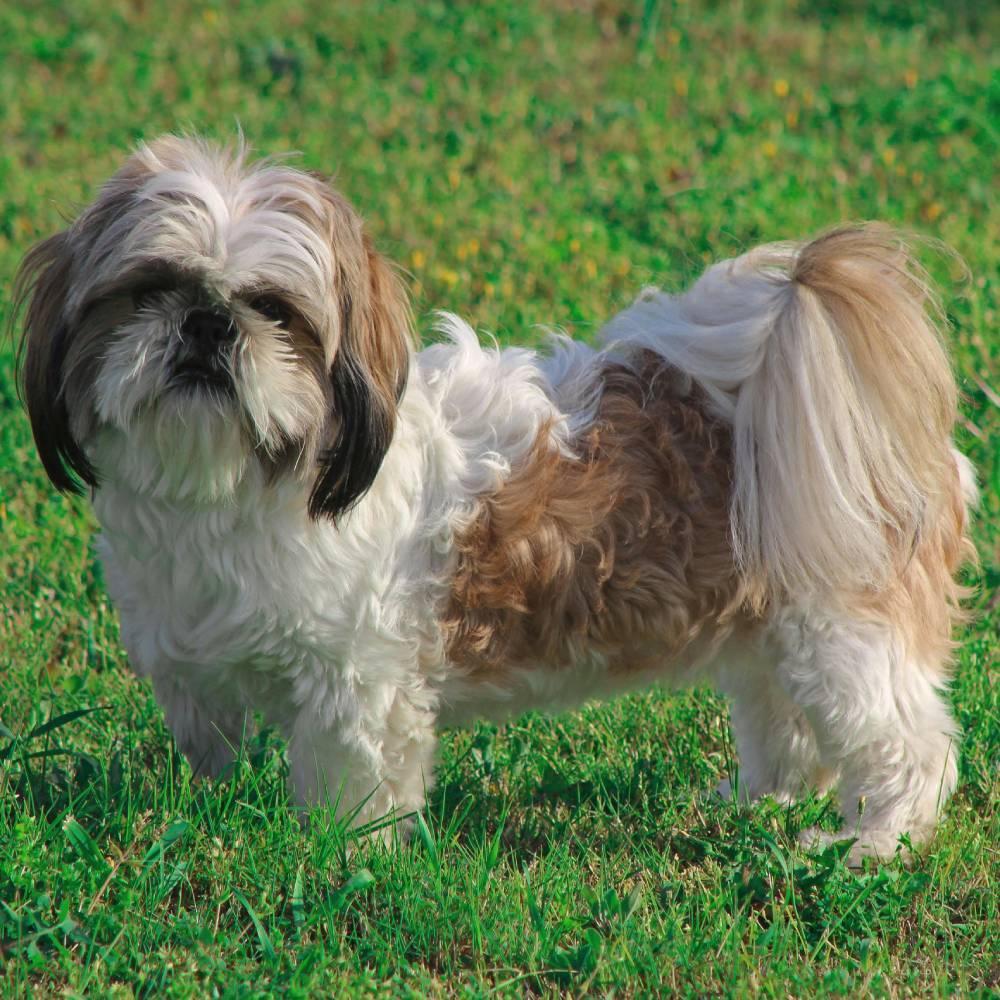
- Breed group: Toy
- Life span: 10 – 16 years
- Weight: 4 – 7 kg (9 – 16 lbs)
- Height: 20 – 28 cm (8 – 11 in)
- Temperament: Affectionate, Playful, Outgoing, Loyal
- Bred for: Companion and lapdog
- Origin: Tibet / China
Research Sources
All health data on this page is drawn from peer-reviewed veterinary studies and authoritative clinical references.
- Pohl et al. 2025 — PLOS ONE — cross-sectional BOAS study across 14 brachycephalic breeds
- Brown et al. 1977 / Hansen et al. 2017 (PNAS 114:43) — IVDD breed risk
- O'Neill et al. 2017 — Companion Animal Health and Genetics — VetCompass corneal ulcerative disease
- Merck Veterinary Manual 2024 — Hypothyroidism in Animals
Read our full guide: IVDD in Dogs — What Every Owner Should Know
Frequently Asked Questions
Are Shih Tzus at high risk for breathing problems?
Cross-sectional BOAS research across brachycephalic breeds reports that about half of Shih Tzus show measurable airway obstruction grades, so breathing comfort should be monitored from early adulthood. Discuss your dog's individual risk with your veterinarian.
Why are eye ulcers a major concern in Shih Tzus?
VetCompass primary-care data identify Shih Tzu as a high-risk breed for corneal ulcerative disease, and their prominent eyes make surface trauma and irritation more likely than in many other breeds. Discuss your dog's individual risk with your veterinarian.
Do Shih Tzus have inherited spine and weight-risk concerns?
Hospital-population IVDD studies list Shih Tzu among significantly increased-risk breeds, and endocrine references also list them as hypothyroidism-predisposed, where unexplained weight gain can be an early clinical sign. Discuss your dog's individual risk with your veterinarian.
Get a personalised health forecast for your Shih Tzu based on age, sex, and lifestyle.
Run the Free Health Forecast