Australian Shepherd Health Risks — What Every Owner Should Know
Australian Shepherd health risks matter because this intelligent herding breed carries several inherited orthopedic, neurologic, eye, and drug-sensitivity concerns documented in veterinary literature. Current evidence highlights developmental hip dysplasia, inherited epilepsy, MDR1 or ABCB1 drug sensitivity, collie eye anomaly, and degenerative myelopathy as the key breed-linked issues owners should understand. These findings do not mean every Australian Shepherd will become ill, but they do show where screening, medication safety checks, and long-term monitoring deserve extra attention. Australian Shepherd health problems, Australian Shepherd common diseases identified in those sources, and the ages when those risks matter most are summarized below in a DVM-reviewed guide.
Most Common Health Conditions in Australian Shepherds
Hip Dysplasia
Hip dysplasia is a developmental orthopedic disorder in which the hip joint forms abnormally, increasing the chance of pain and later joint degeneration. OFA hip registry data reports a 6% dysplastic rate in Australian Shepherds from 49,958 evaluations, placing the breed lower than many other working and herding dogs but still clearly affected. Early signs can include stiffness, gait asymmetry, bunny-hopping, or reduced willingness to jump.
Epilepsy Predisposition
Australian Shepherds are listed in epilepsy consensus literature as a breed with evidence for inherited epilepsy based on pedigree data. Clinical concern usually centers on recurrent seizure episodes that begin in young adulthood, often between one and five years of age. Because many affected dogs appear entirely normal between episodes, careful history and prompt neurologic workup remain important whenever seizure-like events are reported.
MDR1 / ABCB1 Drug Sensitivity
MDR1 drug sensitivity is one of the most clinically important inherited risks in Australian Shepherds because affected dogs may react dangerously to drugs that are routinely used in veterinary practice. Population studies report mutant allele frequencies between 22% and 35% in Australian Shepherd cohorts from different countries. This makes medication history and genetic status unusually important safety questions for the breed throughout life.
Collie Eye Anomaly (CEA)
Collie eye anomaly is an inherited congenital eye-development disorder that can be present from birth, even when the dog appears visually normal at first glance. Genetic work on the NHEJ1 deletion established cosegregation of the mutation across Australian Shepherds and related breeds, and Australian Shepherds are also listed on OFA predisposed-breed resources. Practical concern is greatest in puppies and young dogs, when early ophthalmic screening and DNA awareness matter most.
Degenerative Myelopathy (DM)
Degenerative myelopathy is a progressive spinal cord disorder associated with SOD1 risk alleles and later-life hind-limb weakness. Australian Shepherds are listed in molecular survey work among breeds where the condition is particularly common because of high mutant allele frequency. Clinical signs usually emerge much later than epilepsy or CEA concerns, most often from about eight years onward, with toe scuffing, wobbliness, and slowly progressive loss of coordination.
Health Risks by Age for Australian Shepherds
Based on peer-reviewed evidence and registry-supported breed data.
| Age Range | Conditions to Watch | Why This Age Matters | Vet Action Recommended |
|---|---|---|---|
| 0–1 years | MDR1 drug sensitivity, collie eye anomaly | Medication exposure can happen at any age, and congenital eye findings are most relevant in puppyhood | Discuss MDR1 DNA status before prescribing drugs and arrange early ophthalmic or breeder-screening review |
| 1–3 years | Hip dysplasia (developmental), idiopathic epilepsy onset window | Orthopedic signs and first seizure presentations often emerge in young adult dogs | Orthopedic exam with imaging when indicated; neurologic workup for any seizure-like event |
| 4–7 years | Ongoing epilepsy monitoring, lifelong MDR1 medication safety | Seizure history may clarify over time, while drug-sensitivity risk never truly disappears | Review medication safety at every visit and document any neurologic events carefully |
| 8+ years | Degenerative myelopathy, chronic mobility reassessment | Later-life neurologic decline becomes more relevant as DM risk enters the typical onset window | Senior exams every 6 months with gait, nail wear, hind-limb strength, and coordination review |
Symptoms to Watch For
Contact your veterinarian promptly if you notice any of the following signs in your Australian Shepherd.
- Stiffness, bunny-hopping, reduced willingness to jump, or hind-limb discomfort that may indicate hip dysplasia.
- Recurrent seizure episodes, collapse, or unusual post-episode confusion that may indicate idiopathic-epilepsy.
- Sudden neurologic signs, severe sedation, or loss of balance after medication that may indicate MDR1 drug sensitivity.
- Cloudy eye appearance, navigation issues, or unusual visual behavior in puppies that may indicate collie eye anomaly.
- Toe scuffing, hind-limb weakness, or progressive gait instability in older dogs that may indicate degenerative myelopathy.
Australian Shepherd Breed Profile
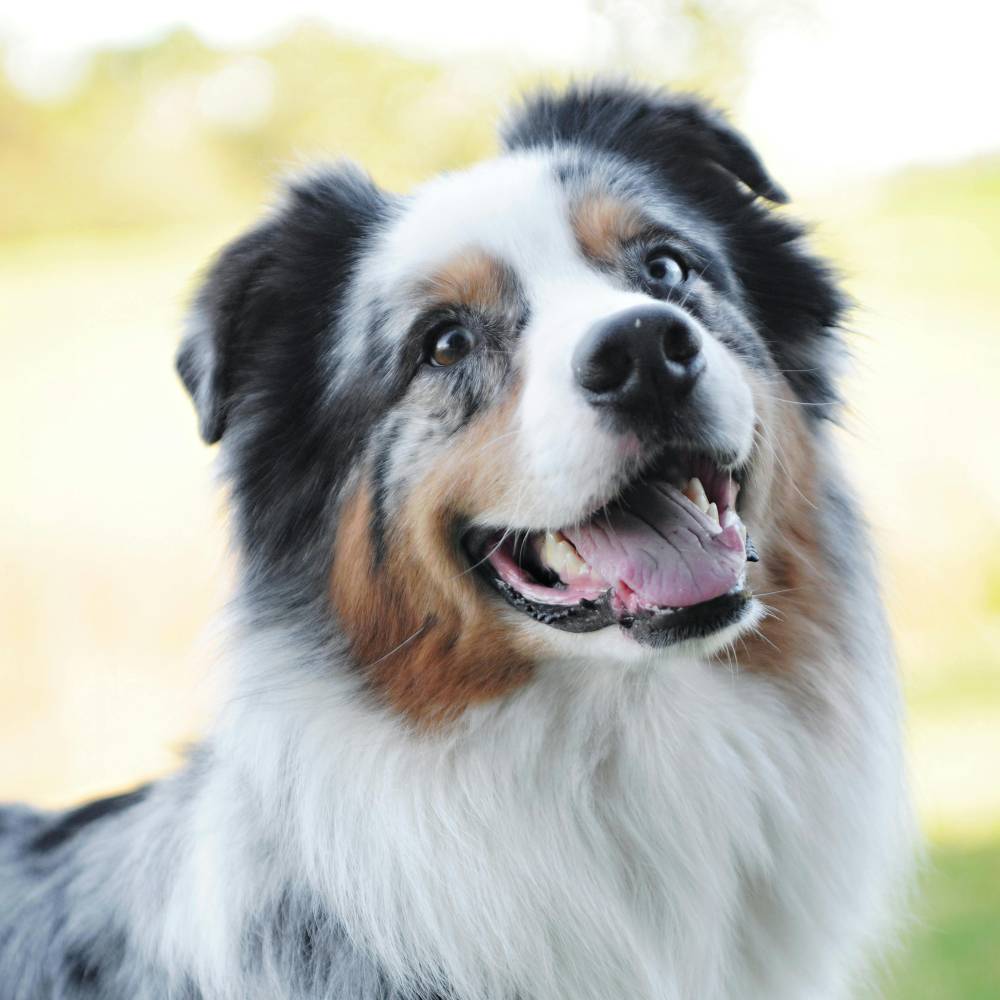
- Breed group: Herding
- Life span: 13 – 15 years
- Weight: 18 – 32 kg (40 – 70 lbs)
- Height: 46 – 58 cm (18 – 23 in)
- Temperament: Intelligent, Active, Loyal, Protective
- Bred for: Herding livestock
- Origin: United States
Research Sources
All health data on this page is drawn from peer-reviewed veterinary studies and official registry datasets.
- OFA Hip Dysplasia Statistics — Australian Shepherd, 49,958 evaluations, Rank 166. ofa.org/diseases/hip-dysplasia/
- Berendt et al. 2015 — IVETF Consensus Report — s12917-015-0461-2 — epilepsy in companion animals.
- Gramer et al. 2011 — Veterinary Journal — MDR1 breed distribution; Mosher et al. 2016 — PMID 27234542 — ABCB1 mutation in European dogs. PMID 27234542
- Parker et al. 2007 — Genome Research 17(11):1562-1571 — CEA NHEJ1 deletion; OFA CEA breed list.
- Maki et al. 2022 — Animals 12:1647 — Degenerative Myelopathy molecular survey.
Read our full guide: Epilepsy in Dogs: Breeds, Signs, and What Vets Look For
Frequently Asked Questions
Are Australian Shepherds prone to hip dysplasia?
OFA hip registry data reports that roughly 1 in 17 Australian Shepherds evaluated show hip dysplasia, so developmental orthopedic monitoring remains relevant even though the breed is lower risk than some other medium and large dogs. Discuss your dog's individual risk with your veterinarian.
Why is the MDR1 mutation important in Australian Shepherds?
Australian Shepherds are a recognized MDR1 or ABCB1 mutation breed, and affected dogs can show dangerous reactions to commonly used medications despite appearing completely normal beforehand. Genetic testing is therefore a major safety tool for this breed. Discuss your dog's individual risk with your veterinarian.
What neurologic problems should Australian Shepherd owners watch for?
Inherited epilepsy can begin in young adult Australian Shepherds, while degenerative myelopathy is a later-life concern linked to progressive hind-limb weakness and coordination loss. Sudden seizures or gradual toe-dragging both deserve veterinary attention. Discuss your dog's individual risk with your veterinarian.
Get a personalised health forecast for your Australian Shepherd based on age, sex, and lifestyle.
Run the Free Health Forecast