Doberman Pinscher Health Risks — What Every Owner Should Know
Doberman Pinscher health risks reflect this breed’s working heritage, lean build, and well-documented inherited disease patterns seen in cardiology, coagulation, neurology, and endocrine literature — including the active adult years when many owners first discuss screening with their veterinarian. Registry and peer-reviewed data identify dilated cardiomyopathy burden among the strongest of any breed in OFA summaries, extraordinarily high carrier rates for von Willebrand disease despite often-silent carriers in everyday life, predisposition to cervical spondylomyelopathy (wobbler syndrome), and recognised hypothyroidism risk listings in major clinical references. Aligning day-to-day observation with those four themes — stamina and cough, bruising or prolonged bleeding after minor insults, neck carriage and gait, coat and metabolic energy — helps owners notice change early and partner with veterinary medicine rather than waiting for crises. Doberman Pinscher health problems, Doberman Pinscher common diseases highlighted in the citations, and surveillance across Doberman Pinscher lifespan follow in the sections below. All health content on this page is DVM-reviewed and sourced from published veterinary literature and official screening datasets.
Most Common Health Conditions in Doberman Pinschers
Dilated Cardiomyopathy (DCM)
Dilated cardiomyopathy is a progressive disease of the heart muscle that weakens pumping capacity and often stays silent until symptoms are advanced. OFA dilated cardiomyopathy disease statistics summarise Doberman Pinschers at rank 1 among evaluated breeds with a reported 9% abnormal or carrier-rate category and an additional 36% equivocal on 1,063 evaluations — a profile that underscores why cardiac surveillance is routinely discussed for healthy adults as well as for dogs presenting with fatigue, cough, weakness, syncope, or abdominal distension linked to congestion.
Von Willebrand Disease (vWD)
Von Willebrand disease describes reduced or dysfunctional von Willebrand factor, a protein that helps platelets form stable clots. Large epidemiologic studies in Doberman Pinschers report that a high fraction of tested dogs show abnormal von Willebrand factor antigen measurements — including reports on the order of three in four dogs in major screening cohorts — while many individuals never show obvious spontaneous bleeding. Risk can become most visible with surgery, trauma, or whelping, when clinicians need to know carrier status in advance.
Wobbler Syndrome (Cervical Spondylomyelopathy)
Wobbler syndrome refers to spinal cord compression or instability in the neck from disc and vertebral changes. Clinical reviews emphasise the Doberman Pinscher among breeds most frequently represented in case material, with gait change, neck pain, hind-limb weakness, and reluctance to flex the neck as common owner-reported patterns. Because progression can be gradual or stepwise, neurology assessment is often recommended when any combination of these signs appears.
Hypothyroidism
Hypothyroidism develops when the thyroid gland produces too little hormone, slowing metabolism and sometimes changing coat and energy long before owners expect a “thyroid problem.” The Merck Veterinary Manual lists the Doberman Pinscher among breeds described as predisposed, with middle-aged presentation common in clinical practice. Typical concerns include unexplained weight gain, reduced stamina, skin and coat changes, and recurrent ear issues that do not fully resolve with routine care alone.
Health Risks by Age for Doberman Pinschers
Based on peer-reviewed evidence, OFA registry statistics, and major clinical reviews.
| Age Range | Conditions to Watch | Why This Age Matters | Vet Action Recommended |
|---|---|---|---|
| 0–5 years | Von Willebrand carrier status (surgical bleeding risk) | Youthful dogs may look completely normal while still carrying clotting-factor patterns that matter if they need sterilisation, bite-wound repair, or other planned procedures | Discuss DNA or phenotypic von Willebrand testing before elective surgery; share results with every clinic that may operate |
| 4–9 years | Dilated cardiomyopathy; wobbler syndrome; early hypothyroidism | DCM surveillance ramps in mature adults; cervical myelopathy peaks in discussion for middle-aged Dobes; metabolic signs of thyroid disease often first appear here | Regular cardiac auscultation with echocardiogram or Holter when indicated; neurologic exam for neck pain or gait change; thyroid panel if coat, weight, or energy shift |
| 7–13 years | Progressive cardiac disease; ongoing hypothyroid management; advanced wobbler care needs | Chronic diseases accumulate; owners may attribute slowing to ageing when treatable illness is contributing | Twice-yearly exams for seniors; titrate cardiac and metabolic therapy with your veterinarian; mobility and pain assessment if gait is declining |
| 10+ years | Frailty from combined cardiac, mobility, and endocrine burden | Life expectancy overlaps with cumulative disease expression in geriatric Dobes | Senior bloodwork and focused quality-of-life review; humane pain control and mobility support coordinated with your vet |
Symptoms to Watch For
Contact your veterinarian promptly if you notice any of the following signs in your Doberman Pinscher.
- Lethargy, reduced exercise tolerance, cough, fainting, or resting breathing-rate increases that may indicate dilated cardiomyopathy.
- Bleeding that lasts longer than expected from minor cuts, nose or gum bleeding, blood-tinged urine, unusual bruising, or heavy bleeding after surgery or whelping that may indicate von Willebrand disease.
- Wobbly hind-limb gait, neck stiffness or pain, dragging toes, or reluctance to lower the head to eat that may indicate wobbler syndrome.
- Weight gain without dietary change, dry or thinning coat, heat-seeking, or low energy that may indicate hypothyroidism.
Doberman Pinscher Breed Profile
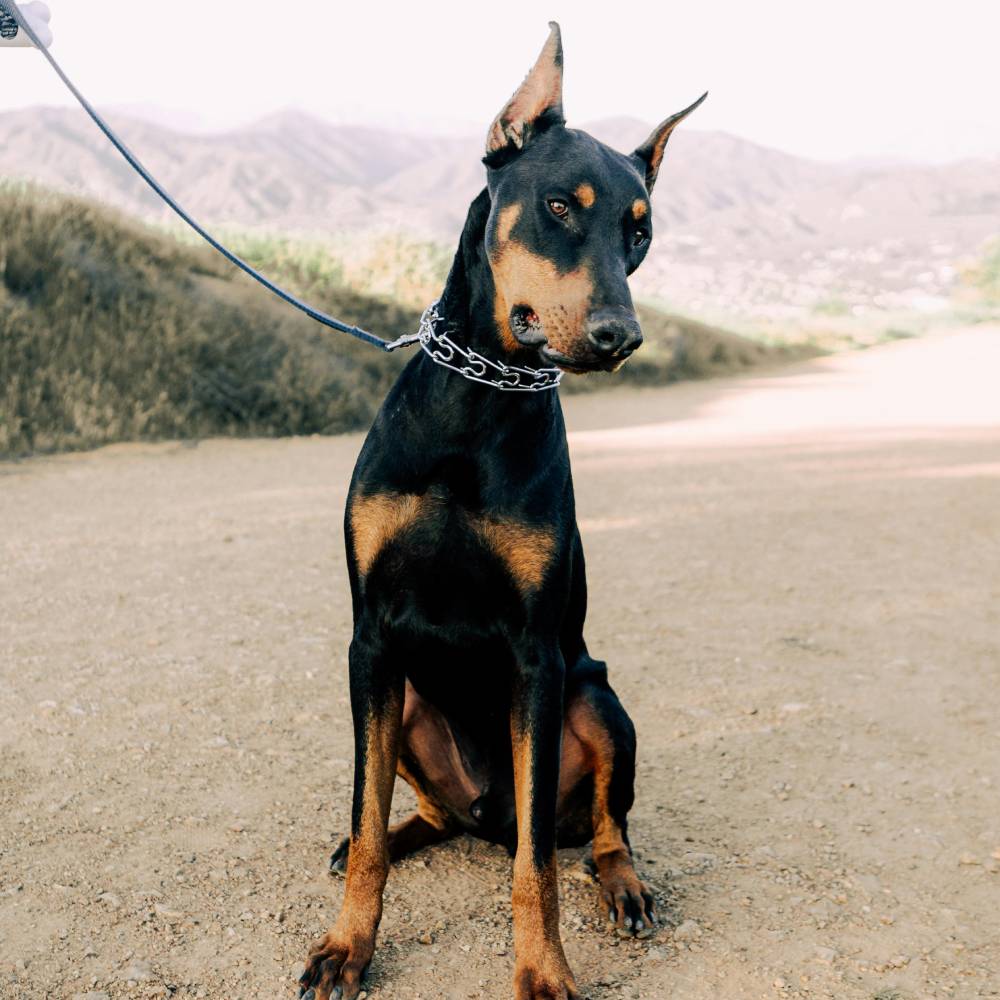
- Breed group: Working
- Life span: 10 – 13 years
- Weight: 32 – 45 kg (70 – 100 lbs)
- Height: 61 – 72 cm (24 – 28 in)
- Temperament: Loyal, Fearless, Alert, Intelligent
- Bred for: Personal protection and guarding
- Origin: Germany
Research Sources
All health data on this page is drawn from peer-reviewed veterinary studies and official registry datasets.
- OFA Dilated Cardiomyopathy Disease Statistics Report — Doberman Pinscher Rank 1.
- Brooks M, Dodds WJ (1992). Epidemiologic features of von Willebrand's disease in Doberman Pinschers, Scottish Terriers, and Shetland Sheepdogs: 260 cases (1984-1988). Journal of the American Veterinary Medical Association 200(8):1123-1127 — vWD in Doberman Pinschers.
- Crespi JA et al. (2018). Polymorphisms in the VWF gene in Doberman Pinscher dogs with von Willebrand disease. Journal of Veterinary Diagnostic Investigation 30(2):310-314 — PMC6505864.
- Da Costa RC (2010). Disc-associated wobbler syndrome in the Doberman pinscher. Veterinary Clinics of North America: Small Animal Practice 40(5):881-896 — Wobbler syndrome in Doberman Pinschers.
Frequently Asked Questions
How high is dilated cardiomyopathy risk in Doberman Pinschers?
OFA dilated cardiomyopathy registry statistics place the Doberman Pinscher at the highest evaluated rank for abnormal findings among breeds, alongside a sizeable equivocal rate in screened dogs — evidence that cardiomyopathy surveillance is central to wellness planning for the breed. Discuss your dog's individual risk with your veterinarian.
What does a high von Willebrand carrier rate mean for my Doberman?
Published screening studies describe very high fractions of abnormal von Willebrand factor results in sampled Doberman populations, although many carriers never show outward bleeding signs in daily life — risk can become most relevant during surgery or major injury when clotting matters most. Discuss your dog's individual risk with your veterinarian.
Why are Doberman Pinschers associated with wobbler syndrome?
Veterinary reviews of cervical spondylomyelopathy consistently highlight the Doberman Pinscher among the breeds most commonly represented in clinical cohorts reporting disc-associated wobbler syndrome. Discuss your dog's individual risk with your veterinarian.
Get a personalised health forecast for your Doberman Pinscher based on age, sex, and lifestyle.
Run the Free Health Forecast