Great Dane Health Risks — What Every Owner Should Know
Great Dane health risks tie closely to this breed's giant size, rapid growth, and fast onset of several life-threatening conditions. These conditions dominate veterinary emergency and speciality literature; they are not rare anecdotes. Landmark prospective studies document an exceptionally high lifetime probability of gastric dilatation-volvulus. Large screening cohorts show substantial echocardiographic evidence of dilated cardiomyopathy. Neurology textbooks pair Great Danes with Dobermans in discussions of cervical spondylomyelopathy. Modern primary-care oncology databases quantify steep osteosarcoma odds ratios versus mixed-breed dogs. Each theme shapes what responsible ownership looks like beyond basic wellness visits. Watch feeding routines, gait, exercise tolerance, limb symmetry, neck carriage, breathing effort at rest, and any rapid abdominal distension. These checks turn abstract statistics into daily signals that can prompt earlier veterinary discussion instead of late-night emergencies. Great Dane health problems, Great Dane common diseases emphasised in emergency and specialty literature, and vigilance across Great Dane lifespan structure the sections below. All health content on this page is DVM-reviewed and sourced from published veterinary literature and official screening datasets.
Most Common Health Conditions in Great Danes
Gastric Dilatation-Volvulus (GDV / Bloat)
GDV combines stomach distension with rotation that compromises blood supply and cardiovascular stability; it belongs in every Great Dane family's emergency preparedness conversation. Purdue/JAVMA risk-factor research cites an estimated roughly 42% lifetime probability of gastric dilatation-volvulus in Great Danes from their large-and-giant-breed longitudinal cohort. That figure is the highest framed estimate among breeds analysed. These data support decisive owner education about rest versus exercise around meals. They also highlight which hospitals can operate overnight.
Dilated Cardiomyopathy (DCM)
Dilated cardiomyopathy progressively thins cardiac muscle fibres so the chambers dilate and forward output falls. Affected dogs might mask illness until tachypnoea or syncope abruptly appears. Screening programmes in cooperative UK Great Dane practices reported over one third of adolescent-to-adult Danes echocardiographically affected in at least one published series. Those findings imply asymptomatic echocardiography or Holter discussion is far from academic over-testing for this phenotype.
Wobbler Syndrome (Cervical Spondylomyelopathy)
Wobbler syndrome describes cervical cord compression triggered by skeletal or disc-associated malalignment; young giant breeds can exhibit low-grade gait change long before paralysis is imminent. Comparative surgical and medical reviews emphasise Great Danes together with Doberman Pinschers. The two breeds furnish the lion's share of published cervicomedullary myelopathy cohorts worldwide. Asymmetric proprioceptive deficits merit specialist neurology pathways early.
Osteosarcoma
Osteosarcoma is an aggressive bone tumour clustering in appendicular sites of large skeletal mass; microscopic pulmonary micrometastases are presumed even when thoracic imaging looks quiet early on. Breed-disaggregated VetCompass UK analytics attribute odds ratios exceeding thirty-fold for osteosarcoma in Great Danes compared with mixed-breed reference dogs. The same work cites breed-specific prevalence figures extrapolated across nearly one million anonymised consultations. Those data underpin urgency when a Dane develops focal lameness plus firm periarticular swellings without trauma context.
Health Risks by Age for Great Danes
Based on prospective GDV modelling, echocardiographic screening cohorts, neurology case literature, and national primary-care tumour analytics.
| Age Range | Conditions to Watch | Why This Age Matters | Vet Action Recommended |
|---|---|---|---|
| 0–18 months | Wobbler syndrome onset; skeletal growth pacing | Giants lengthen bone rapidly — subtle neck pain or clumsy gait can precede overt cord compression imaging findings | Balanced calorie and calcium plans from your vet; prompt neuro exam and MRI if gait asymmetry persists |
| 3–8 years | GDV; early DCM; osteosarcoma emergence | Peak adulthood intersects maximal stomach torsion incidence curves, covert cardiomyopathy screening hits, primary appendicular tumour window | Discuss elective gastropexy during sterilisation surgery; echocardiographic screening intervals; orthogonal radiographs promptly for unexplained limb lameness ± swelling |
| 7–11 years | Overt DCM progression; tumour metastasis vigilance | Geriatric Dane physiology tolerates cardiogenic decompensation poorly; tumour spread often accelerates subtly | Twice yearly cardiology-follow if murmur precedes imaging abnormality; staged staging diagnostics when osteosarcoma confirmed |
| Throughout life | GDV remains persistent background risk | Published lifetime estimates remain elevated even beyond first emergency episode anecdotes | Family emergency transport plan rehearsed quarterly; minimise single huge meals and excitement bloat stacks |
Symptoms to Watch For
Contact your veterinarian promptly if you notice any of the following signs in your Great Dane.
- Nonproductive retching, tight fluid-distended abdomen, pale gums after exercise or feeding that may herald gastric dilatation-volvulus emergency.
- Rapid resting respiratory rate overnight, coughing when lying sternal, collapsing during activity suggestive of dilated cardiomyopathy-induced congestion or arrhythmia.
- Wide-based pelvic limb ataxia, neck guarding, intermittent knuckling attributable to cervical spondylomyelopathy (wobbler).
- Progressive lame limb, palpable periosteal swellings, reduced appetite pairing with lethargy suggestive of osteoblastic tumour pain.
Great Dane Breed Profile
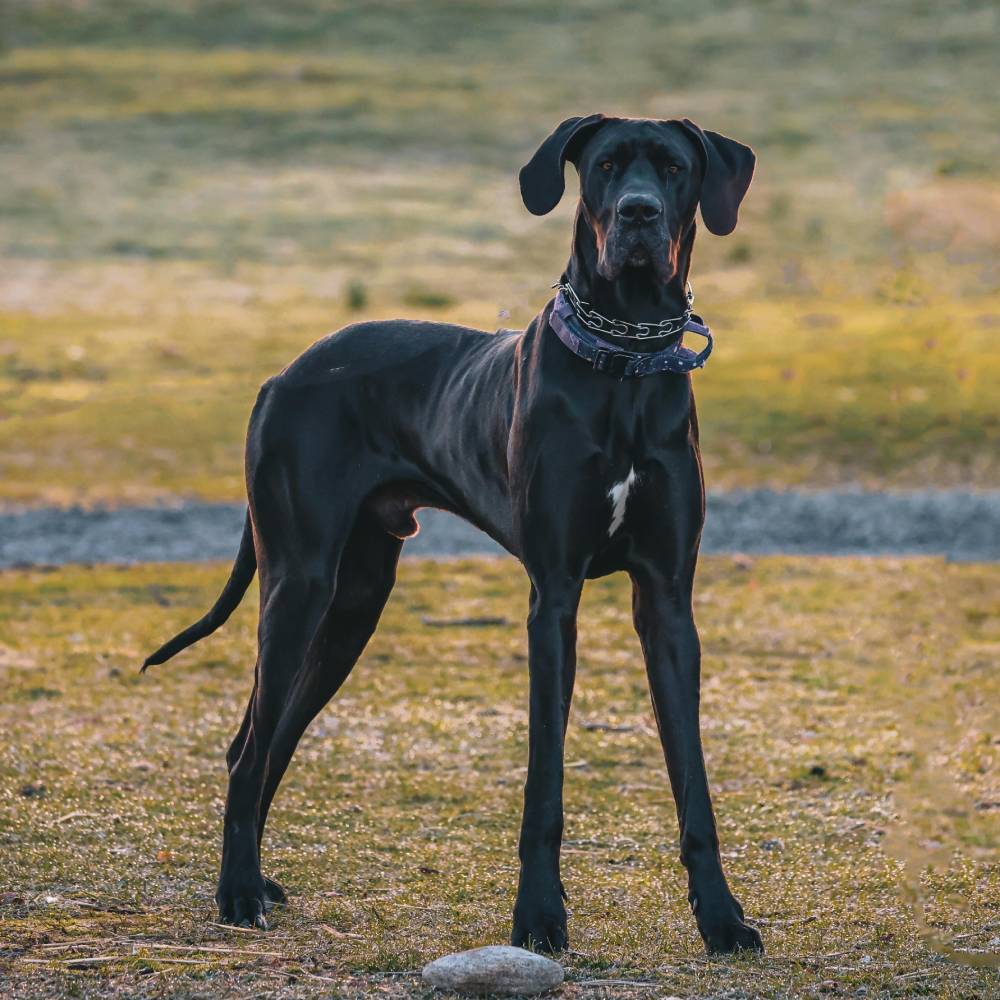
- Breed group: Working
- Life span: 7 – 10 years
- Weight: 50 – 82 kg (110 – 180 lbs)
- Height: 71 – 86 cm (28 – 34 in)
- Temperament: Friendly, Patient, Dependable, Gentle
- Bred for: Hunting boar and estate guarding
- Origin: Germany
Research Sources
All health data on this page is drawn from peer-reviewed veterinary studies and official registry datasets.
- Glickman LT et al. (2000). Journal of the American Veterinary Medical Association — Non-dietary risk factors for gastric dilatation-volvulus in large and giant breed dogs.
- Stephenson HM et al. (2012). Journal of Veterinary Internal Medicine 26(5):1140-1147 — DCM screening in Great Danes in the United Kingdom — PMID 22882627.
- Da Costa RC (2010). Veterinary Clinics of North America: Small Animal Practice — Wobbler Syndrome in Doberman Pinschers and Great Danes.
- Edmunds GL et al. (2023). PMC10294386 — VetCompass osteosarcoma study UK.
Frequently Asked Questions
Why is gastric dilatation-volvulus (GDV or bloat) such a central concern in Great Danes?
Prospective veterinary literature in large-breed cohorts estimates a very high lifetime incidence of gastric dilatation-volvulus in Great Danes compared with almost any other pedigree group, which explains why guardians and vets discuss prevention and emergency planning early rather than reactively alone. Discuss your dog's individual risk with your veterinarian.
What should owners know about dilated cardiomyopathy screening for Great Danes?
Clinic-based echocardiographic screening programmes in representative Great Dane cohorts demonstrate that a sizeable fraction may show echocardiographic evidence of cardiomyopathic change well before catastrophic symptoms emerge, signalling that cardiologist-guided monitoring is clinically relevant beyond casual annual listening alone. Discuss your dog's individual risk with your veterinarian.
Are Great Danes at increased risk for bone cancer?
Nationwide veterinary primary-care analytic studies report markedly elevated odds of osteosarcoma for Great Danes compared with mixed-breed comparators alongside measurable annual prevalence in very large denominators — evidence that unexplained limb pain or swelling warrants prompt imaging rather than watchful waiting indefinitely. Discuss your dog's individual risk with your veterinarian.
Get a personalised health forecast for your Great Dane based on age, sex, and lifestyle.
Run the Free Health Forecast