Pomeranian Health Problems: What Every Owner Should Know
Pomeranian health problems deserve attention from the first weeks at home because this compact spitz breed combines a long lifespan with several well-documented predispositions affecting the knees, airway, and coat. Orthopedic Foundation for Animals screening ranks Pomeranians first among evaluated breeds for patellar luxation, with roughly twenty-nine percent of tested dogs showing abnormal findings. Small-breed tracheal collapse studies likewise list Pomeranians among the most frequently affected dogs, while dermatology literature documents alopecia X as a characteristic coat disorder in German Spitz lines. None of these conditions affect every individual, yet they outline the organ systems deserving consistent monitoring from puppyhood through senior years. Pomeranian common diseases referenced in the bibliography below, and planning across Pomeranian lifespan, inform the overview on this DVM-reviewed BreedRisk page.
Most Common Health Conditions in Pomeranians
Patellar Luxation
Patellar luxation occurs when the kneecap slips out of its groove, producing intermittent skipping steps, hind-limb lameness, or reluctance to jump and climb stairs. OFA patellar screening of 3,395 Pomeranians reports a 29% abnormal rate — the highest among all breeds evaluated — with clinical concern most often concentrated between one and four years of age. Grades range from mild tracking instability to severe luxation that may require surgical correction after orthopaedic grading.
Tracheal Collapse
Tracheal collapse describes weakening of the cartilage rings that support the windpipe, causing the airway to narrow and producing a chronic, paroxysmal dry cough often described as a goose honk. Kim and colleagues (2024) reported Pomeranians as the second most represented breed in a retrospective series of 110 small-breed dogs, accounting for 22.7% of cases with a mean age at diagnosis of 11.37 years. Harness walking and prompt evaluation when honking cough or breathing noise escalates remain central management themes.
Alopecia X
Alopecia X causes progressive, symmetrical hair loss on the neck, trunk, and tail, often with darkening of exposed skin. It is non-itchy and not painful. The earliest sign is failure to shed the puppy coat around four months of age, with adult coat changes typically appearing between three and six years. Ferreira and Ferreira (2022) surveyed 171 German Spitz (Pomeranians) and found that 93% of affected animals failed to change their infant coat — a pattern owners and breeders should recognise early.
Health Risks by Age for Pomeranians
Based on OFA registry data and peer-reviewed small-breed studies cited on this page.
| Age Range | Conditions to Watch | Why This Age Matters | Vet Action Recommended |
|---|---|---|---|
| 0–1 years | Patellar luxation (developmental); puppy-coat retention (alopecia X early sign) | Kneecap tracking problems often surface in lively young dogs; failure to shed puppy coat may appear by 4–5 months | Orthopaedic examination at wellness visits; dermatology review if coat fails to transition normally |
| 1–4 years | Patellar luxation (active window) | OFA data cluster clinical concern in early adulthood when activity peaks | Patella grading; discuss surgical options if lameness is persistent |
| 3–6 years | Alopecia X | Symmetrical adult hair loss and hyperpigmentation commonly emerge in this band | Rule out hypothyroidism and Cushing's disease before confirming alopecia X |
| 7–14 years | Tracheal collapse | Retrospective series report mean diagnosis near 11 years in affected small breeds | Airway imaging for chronic honking cough; harness-first handling; weight management |
Symptoms to Watch For
Contact your veterinarian promptly if you notice any of the following signs in your Pomeranian.
- Intermittent skipping or hopping on a hind leg, sudden lameness that resolves, or reluctance to jump that may indicate patellar luxation.
- A popping or clicking sound from the knee, or a hind leg held up while walking, which may also reflect patellar luxation.
- Chronic dry cough with a goose-honking sound, coughing triggered by excitement or exercise, or blue-tinged gums during severe episodes that may indicate tracheal collapse.
- Breathing difficulty or wheezing worsened by heat, humidity, or collar pressure that may indicate tracheal collapse.
- Failure to shed the puppy coat by 4–5 months, symmetrical hair loss on the neck, trunk, or tail, or darkening of exposed skin without scratching that may indicate alopecia X.
Pomeranian Breed Profile
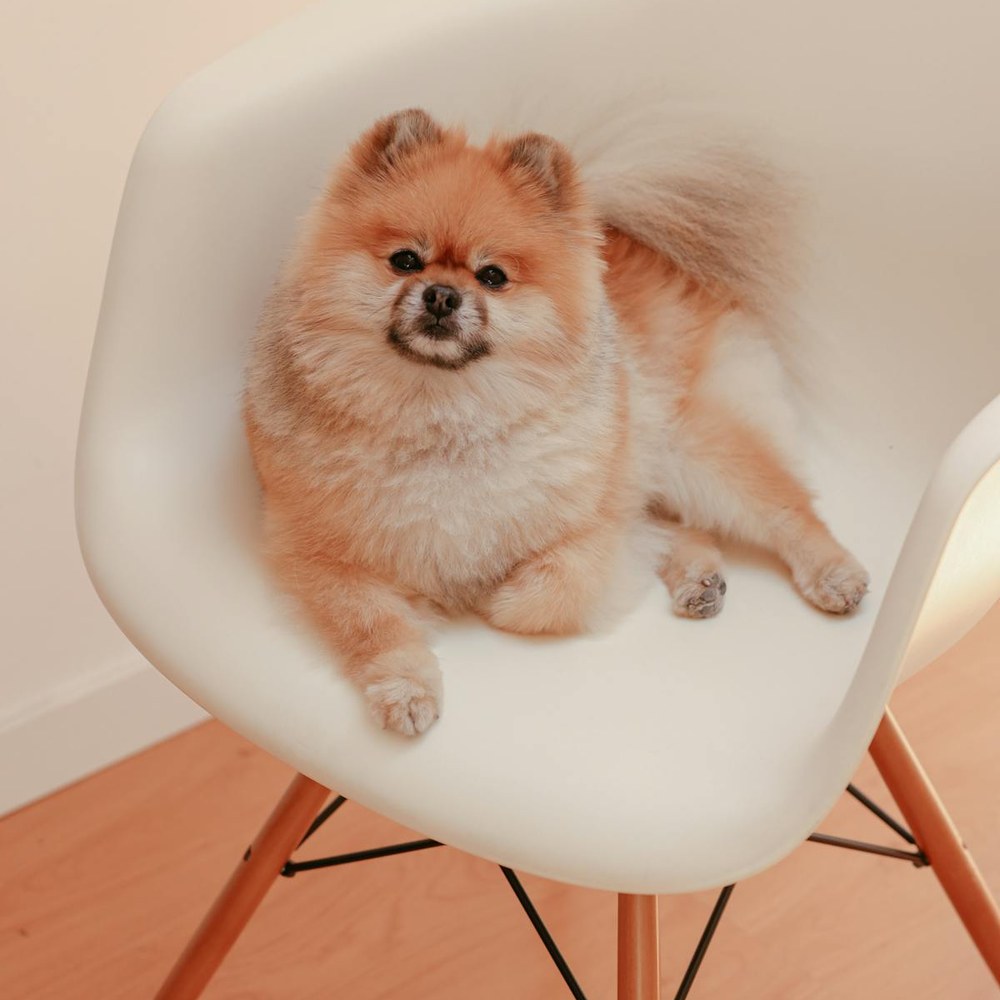
- Breed group: Toy
- Life span: 12 – 16 years
- Weight: 1.4 – 3.2 kg (3 – 7 lbs)
- Height: 18 – 30 cm (7 – 12 in)
- Temperament: Lively, Bold, Inquisitive, Extroverted, Intelligent
- Bred for: Companion
- Origin: Germany, Poland (Pomerania)
Research Sources
All health data on this page is drawn from peer-reviewed veterinary studies and official registry references.
- Orthopedic Foundation for Animals (OFA). Patellar Luxation Statistics. Retrieved from https://www.ofa.org/diseases/patellar-luxation/
- Kim et al. (2024). A retrospective study of tracheal collapse in small-breed dogs: 110 cases (2022–2024). Frontiers in Veterinary Science. https://doi.org/10.3389/fvets.2024.1448249
- Ferreira & Ferreira (2022). Alopecia X in dogs: report of seven cases. Research, Society and Development. https://doi.org/10.33448/rsd-v11i10.32652
Frequently Asked Questions
What are the most common health problems in Pomeranians?
Pomeranians are most commonly affected by patellar luxation, tracheal collapse, and alopecia X. Patellar luxation — where the kneecap slips out of place — affects around 29% of Pomeranians evaluated by the OFA, making it the highest-ranked breed for this condition. Tracheal collapse and alopecia X are also well-documented predispositions in the breed. Discuss your dog's individual risk with your veterinarian.
How serious is patellar luxation in Pomeranians?
Patellar luxation is the most significant orthopaedic concern in Pomeranians. OFA data from 3,395 evaluations shows a 29% abnormal rate, with the breed ranking first among all evaluated breeds for this condition. Severity ranges from Grade 1 (mild, often manageable) to Grade 3 (severe, may require surgery). Early detection through regular vet checks is important. Discuss your dog's individual risk with your veterinarian.
Do Pomeranians get tracheal collapse?
Yes — Pomeranians are one of the most commonly affected breeds. In a retrospective study of 110 small-breed dogs diagnosed with tracheal collapse, Pomeranians were the second most represented breed, accounting for 22.7% of cases. The condition typically appears in middle to senior age, with most diagnosed dogs over 8 years old. The hallmark sign is a chronic dry cough that sounds like a goose honk. Discuss your dog's individual risk with your veterinarian.
What is alopecia X in Pomeranians?
Alopecia X is a hormonal condition causing progressive, symmetrical hair loss on the neck, trunk, and tail, often with skin darkening. It is non-itchy and not painful. The earliest sign is failure to shed the puppy coat around 4 months of age, with adult hair loss typically appearing between 3 and 6 years. A survey of 171 Pomeranians found that 93% of affected dogs failed to change their infant coat. Discuss your dog's individual risk with your veterinarian.
How long do Pomeranians live?
Pomeranians typically live between 12 and 16 years, making them one of the longer-lived small breeds. Managing predisposed conditions like patellar luxation and tracheal collapse early can support a better quality of life into senior years. Discuss your dog's individual risk with your veterinarian.
Get a personalised health forecast for your Pomeranian based on age, sex, and lifestyle.
Run the Free Health Forecast