Siberian Husky Health Risks — What Every Owner Should Know
Siberian Husky health pairs athletic looks with two very different data stories. Orthopedic registries show very low hip dysplasia loads next to heavier breeds. Breed eye screening logs still lift inherited lens disease to the top of the list. Orthopedic Foundation for Animals data rank the Siberian Husky among the smallest dysplastic shares in the nation. Young sled-line dogs may still show off-and-on lameness. That lameness often traces to soft-tissue strain, not severe hip shape change. Breed club ophthalmology ledgers list hereditary cataracts as the most tally-visible inherited eye finding in surveyed Siberians. Pedigree genetics papers tie a largely breed-restricted X-linked progressive retinal atrophy genotype to this breed. Plainly affected dogs on exams stay well under one-percent counts. Owners should use hip X-rays when gait flags worry them. They should add routine specialist eye exams and clear mating talks. Siberian Husky health problems and Siberian Husky common diseases reflected in screening data are outlined next. Exams across Siberian Husky lifespan appear in the sections below. All health content on this page is DVM-reviewed. It is sourced from published veterinary literature and official screening datasets.
Most Common Health Conditions in Siberian Huskies
Hip Dysplasia
Hip dysplasia causes loose hips and a poor fit between femoral heads and pelvic sockets. It can cause uneven gait in young dogs. It can cause joint wear in older dogs. Siberian Huskies sit among the lowest hip dysplasia rates in Orthopedic Foundation for Animals tables. Breed-wide orthopedic registry exports credit Siberian Huskies with roughly 2.0 percent dysplastic categorisation across tens of thousands of submitted radiographs. The breed ranks 206 among 218 tabulated breeds for severity burden. That rank places Siberians among the brighter hip profiles used in pedigree comparisons.
Hereditary Cataracts
Hereditary cataracts cloud the Siberian Husky lens. They often show up years before typical old-dog lens hardening in mixed breeds. Owners should check eyes in angled lamp light. They should not brush off dusk trips or stumbles as quirks. Aggregated ophthalmology examinations maintained by Siberian fanciers tally hereditary cataracts in roughly eight percent of detailed exams. That rate is about one Siberian Husky in twelve among screened subsets. Those numbers show why specialist eye visits belong in routine wellness plans.
Progressive Retinal Atrophy (XLPRA)
Siberian-associated X-linked progressive retinal atrophy (XLPRA) is a retinal loss pattern mapped mainly in Siberian Husky pedigrees. Males are more often affected because X-linked traits ride on their single X chromosome. Researchers mapped the defect decades ago. Breeders still cite it when they plan intact-line matings. Ophthalmologic screening numerator data are published alongside pedigree club education chapters. They enumerate only a handful of progressive retinal atrophy classifications within recent thousand-plus examination denominators. The affected share stays under one percent. Frank blindness on exams is rare. Carrier-aware mating plans still carry weight for litters.
Health Risks by Age for Siberian Huskies
Based on OFA hip registry rankings, SHCA eye examination tallies, and peer-reviewed XLPRA genetics literature.
| Age Range | Conditions to Watch | Why This Age Matters | Vet Action Recommended |
|---|---|---|---|
| 0–18 months | Hip laxity phenotype; congenital lens change | Puppies consolidate gait patterns while lens clarity can betray early cataract genes before dramatic vision loss unfolds | Orthopedic exam with targeted radiographs if bunny-hopping; baseline ophthalmologist visit if lineage uncertain |
| 18 months–6 years | Rapid cataract progression; retina evaluation windows | Working dogs mask subtle night deficits until novelty environments expose hesitancy traversing ramps or forests | Annual ACVO-style screening per SHCA breeder guidance timeline; genotype counselling before breeding |
| 6–12 years | Osteoarthritis if mild hip structural variants exist superimposing mileage | Even low-percentage hip dysplasia backgrounds still accumulate cartilage wear analogous to taller athletes pounding trails | Body condition moderation; pain scoring with musculoskeletal reconsideration imaging when stiffness plateaus worsen |
| Senior (10+) | Compounded vision compromise from cataract plus plausible age retinal interplay | Owners may wrongly attribute clumsiness wholly to cognition without retinal thinning reassessment layering atop lens opacity stacks | Low-stress ophthalmology recheck rhythm; compassionate household lighting adjustments negotiated with clinician |
Symptoms to Watch For
Contact your veterinarian promptly if you notice any of the following signs in your Siberian Husky.
- Bunny hopping, pelvic sway, reluctance squatting indicative of juvenile hip dysplasia or orthopaedic stiffness despite favourable population statistics individually.
- Cloudy pupil glow, clumsiness at twilight corridors, asymmetric eye shine hinting emerging hereditary cataract burden.
- Progressively wider peripheral bumping navigating dim hallways implying retinal degeneration layering irrespective of cataract opacity density.
Siberian Husky Breed Profile
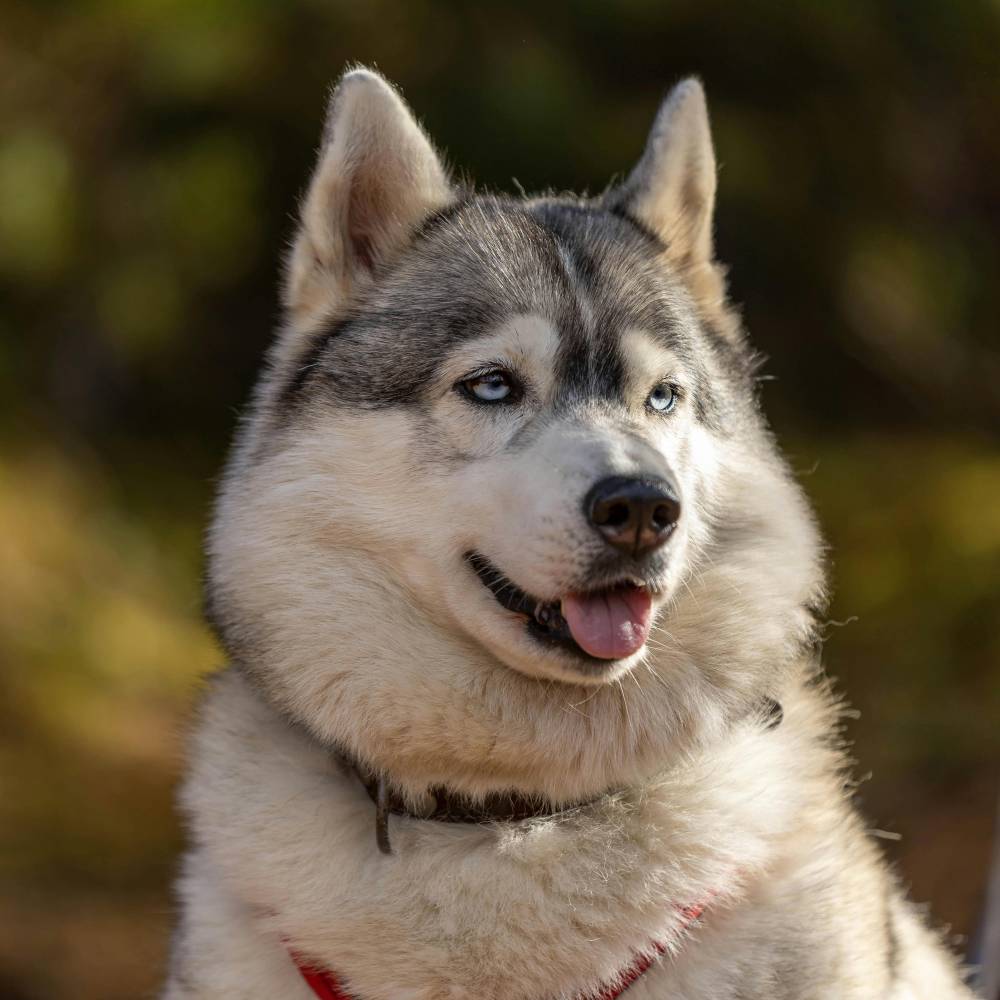
- Breed group: Working
- Life span: 12 – 14 years
- Weight: 16 – 27 kg (35 – 60 lbs)
- Height: 51 – 60 cm (20 – 24 in)
- Temperament: Friendly, Outgoing, Alert, Gentle
- Bred for: Sled pulling and endurance racing
- Origin: Siberia, Russia
Research Sources
All health data on this page is drawn from peer-reviewed veterinary studies and official screening datasets.
Read our full guide: Epilepsy in Dogs: Breeds, Signs, and What Vets Look For
Frequently Asked Questions
How common is hip dysplasia in Siberian Huskies compared with other breeds?
Orthopedic Foundation for Animals cumulative hip grading shows one of the lowest dysplasia percentages among Siberian Huskies in its published breed-ranked tables, illustrating why many movement concerns in young Huskies turn out to be training or transient soft-tissue soreness—but radiographic certainty still rests with selective screening programmes. Discuss your dog's individual risk with your veterinarian.
What should I know about hereditary cataracts in Siberian Huskies?
Breed club aggregated ophthalmology screening spreadsheets document cataracts among the most frequently tally-coded inherited diagnoses in examined Siberian Huskies rather than sporadic outliers, implying routine specialist eye exams matter even when outward vision appears normal to owners in bright daylight environments. Discuss your dog's individual risk with your veterinarian.
What is X-linked progressive retinal atrophy in Siberian Huskies?
Peer-reviewed pedigree and molecular pedigree papers describe an X-linked progressive retinal atrophy phenotype largely confined genetically to Siberian Huskies, with contemporary screening denominators reaffirming that outright affected animals represent a fractional minority albeit one serious enough that carrier-aware mating strategies remain ethically central to breed health conversations. Discuss your dog's individual risk with your veterinarian.
Get a personalised health forecast for your Siberian Husky based on age, sex, and lifestyle.
Run the Free Health Forecast