Weimaraner Health Risks — What Every Owner Should Know
Weimaraner health risks are important to understand because this deep-chested sporting breed carries several inherited and conformational conditions documented in veterinary literature. Current evidence highlights gastric dilatation-volvulus, developmental hip dysplasia, mast cell tumour predisposition, and spinal dysraphism as the most important breed-linked concerns for owners to monitor. These findings do not mean every Weimaraner will become ill, but they do show where emergency awareness, orthopedic follow-up, skin-mass vigilance, and breeder screening matter most. Weimaraner health problems, Weimaraner common diseases described in those sources, and the ages when those risks become most relevant are summarized below in a DVM-reviewed guide.
Most Common Health Conditions in Weimaraners
Gastric Dilatation-Volvulus (GDV / Bloat)
Weimaraners are a classic deep-chested large breed at high risk for gastric dilatation-volvulus, the emergency condition in which the stomach fills with gas and may twist. The Purdue large-breed GDV study reported an estimated lifetime risk around 24% for large breeds including Weimaraners, placing them among the breeds where bloat prevention and early recognition matter most. Typical concern begins in mature adulthood and rises further with age.
Hip Dysplasia
Hip dysplasia is a developmental orthopedic disorder in which the hip joint forms abnormally, increasing the chance of pain and later arthritis. OFA registry data for Weimaraners reports approximately 8.5% dysplastic findings from 11,733 evaluations, which is a meaningful but not extreme rate for a large athletic breed. Early signs may include stiffness after activity, reluctance to jump, or altered rear-limb gait in young adults.
Mast Cell Tumour
Mast cell tumours are the most common malignant skin tumours in dogs, and Weimaraners are overrepresented in cancer-predisposition analyses. Dobson reported a cancer mortality risk ratio of 1.7 for Weimaraners compared with the general dog population, with cancer accounting for 24.0% of recorded deaths in the breed. Practical concern centers on any new skin lump, especially one that changes size, becomes inflamed, or is associated with digestive upset.
Spinal Dysraphism
Spinal dysraphism is a Weimaraner-specific inherited neurologic condition linked to the NKX2-8 mutation. Affected puppies typically show a characteristic bunny-hopping hind-limb gait and abnormal rear-leg reflex patterns from birth or very early life, while front-limb strength remains normal. Unlike many neurologic disorders, the condition is not painful, does not progress, and most affected dogs can live normal lives, making breeder screening especially important.
Health Risks by Age for Weimaraners
Based on peer-reviewed evidence and registry-supported breed data.
| Age Range | Conditions to Watch | Why This Age Matters | Vet Action Recommended |
|---|---|---|---|
| 0–1 years | Spinal dysraphism | This inherited neurologic condition is present from birth and usually recognized in puppies | Neurologic exam and discussion of DNA testing if bunny-hopping gait or rear-leg reflex abnormalities are noticed |
| 1–3 years | Hip dysplasia (developmental phase) | Orthopedic signs become more obvious as growth finishes and exercise intensity increases | Orthopedic examination with hip imaging when indicated and structured weight management during growth |
| 5–8 years | GDV risk, new skin masses | Emergency bloat risk becomes more relevant in mature deep-chested adults, and cancer surveillance grows in importance | Discuss bloat prevention, seek urgent care for abdominal distension or retching, and sample any new lump promptly |
| 8+ years | GDV, mast cell tumour, chronic orthopedic decline | Senior dogs face cumulative cancer and mobility burden while remaining at high risk for bloat emergencies | Senior wellness visits every 6 months with skin, mobility, and abdominal-history review |
Symptoms to Watch For
Contact your veterinarian promptly if you notice any of the following signs in your Weimaraner.
- Retching without producing vomit, sudden abdominal swelling, restlessness, or collapse that may indicate GDV.
- Stiffness, bunny-hopping, or reluctance to jump and exercise that may indicate hip dysplasia.
- Any new skin lump, a lump that rapidly changes size, or an inflamed skin mass that may indicate mast cell tumour.
- Bunny-hopping rear gait from puppyhood, crouched stance, or abnormal hind-limb reflexes with normal front-limb function that may indicate spinal dysraphism.
Weimaraner Breed Profile
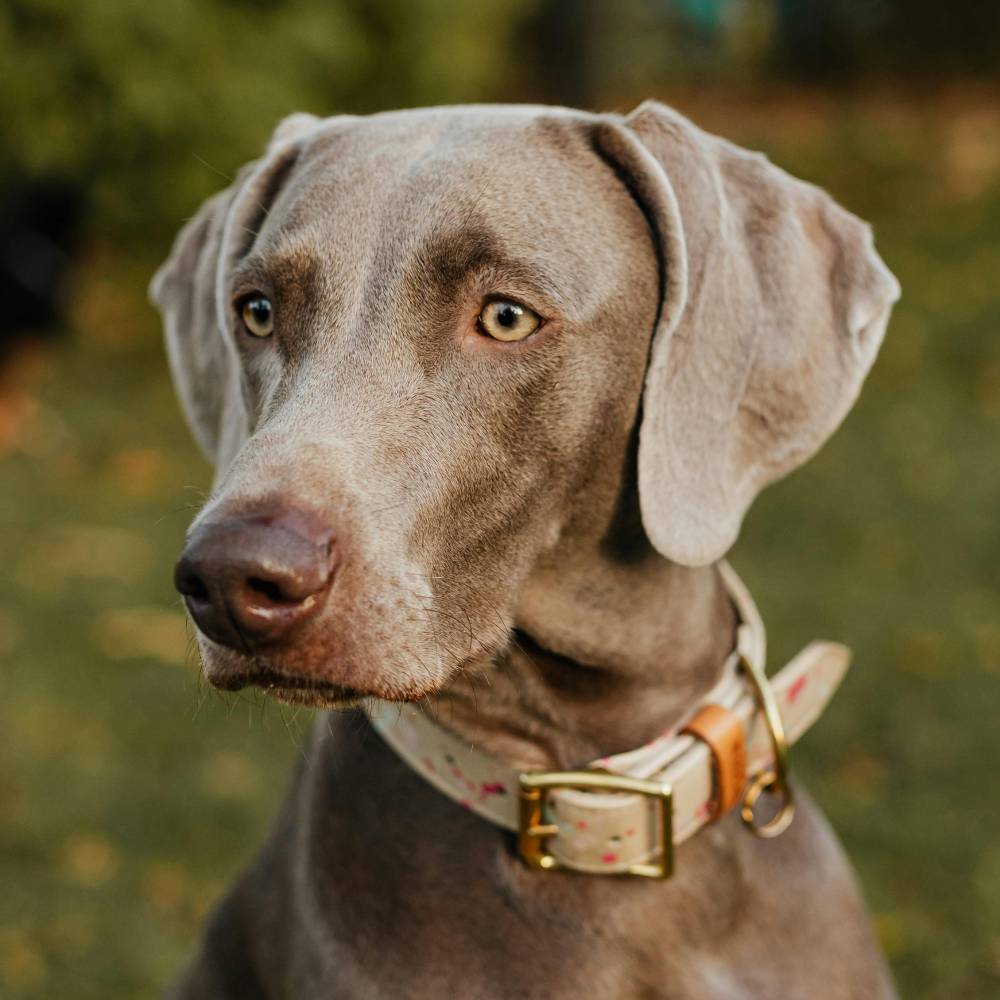
- Breed group: Sporting
- Life span: 11 – 13 years
- Weight: 25 – 40 kg (55 – 88 lbs)
- Height: 56 – 69 cm (22 – 27 in)
- Temperament: Friendly, Fearless, Alert, Obedient
- Bred for: Hunting large game and retrieving
- Origin: Germany
Research Sources
All health data on this page is drawn from peer-reviewed veterinary studies and official registry datasets.
- Glickman et al. 2000 — JAVMA — Non-dietary risk factors for GDV in large and giant breed dogs.
- OFA Hip Dysplasia Statistics — Weimaraner, 11,733 evaluations. ofa.org/diseases/hip-dysplasia/
- Dobson JM 2013 — Breed-Predispositions to Cancer in Pedigree Dogs — ISRN Veterinary Science. doi:10.1155/2013/941275
- Safra et al. 2013 — PLoS Genetics 9(7):e1003646 — NKX2-8 mutation and spinal dysraphism in Weimaraners. doi:10.1371/journal.pgen.1003646
Frequently Asked Questions
Are Weimaraners at high risk for bloat or GDV?
Weimaraners are considered a high-risk GDV breed because the cited large-breed lifetime estimate is roughly 24%, placing them among the more vulnerable deep-chested large dogs for bloat and stomach twisting events. Discuss your dog's individual risk with your veterinarian.
What is spinal dysraphism in Weimaraners?
Spinal dysraphism is a Weimaraner-specific inherited neurologic condition present from birth that typically causes a bunny-hopping hind-limb gait and unusual rear-leg reflexes without being painful or progressive. Discuss your dog's individual risk with your veterinarian.
Which lumps or orthopedic signs in a Weimaraner should be checked quickly?
Any new skin lump, any lump that suddenly changes size, or any persistent stiffness and reluctance to exercise should be assessed because Weimaraners are overrepresented for mast cell tumours and also carry measurable hip dysplasia risk. Discuss your dog's individual risk with your veterinarian.
Get a personalised health forecast for your Weimaraner based on age, sex, and lifestyle.
Run the Free Health Forecast