Bull Terrier Health Problems: What Every Owner Should Know
Bull Terrier health problems deserve attention from the first weeks at home because this distinctive terrier combines a playful temperament with several well-documented inherited risks affecting the heart, kidneys, skin, and hearing. Orthopedic Foundation for Animals data ranks Bull Terriers first among all evaluated breeds for advanced cardiac disease, with a 22% abnormal or carrier rate across 246 evaluations. Kennel Club and BSAVA breed health surveys identify hereditary nephritis as a leading cause of death, while dermatologic and immune-mediated conditions account for over 18% of reported health issues. Congenital sensorineural deafness is a documented inherited condition linked to coat pigmentation. None of these conditions affect every individual, yet they outline the organ systems deserving consistent monitoring from puppyhood through senior years. Bull Terrier common diseases referenced in the bibliography below, and planning across Bull Terrier lifespan, inform this DVM-reviewed BreedRisk overview.
Most Common Health Conditions in Bull Terriers
Cardiac Disease
Cardiac disease in Bull Terriers covers conditions affecting the heart's structure and function, including mitral valve disease, aortic stenosis, and abnormal heart rhythms. OFA advanced cardiac screening reports a 22% abnormal or carrier rate based on 246 evaluations, ranking Bull Terriers first among all evaluated breeds. Early disease is often detected as a heart murmur during routine examination before any symptoms appear, with onset most commonly between one and eight years of age. Annual cardiac auscultation and echocardiography when a murmur is detected are essential preventive steps.
Hereditary Nephritis
Hereditary nephritis is an inherited kidney disease caused by a defect on the X chromosome that damages the glomerular basement membrane, leading to progressive kidney failure. Kennel Club and BSAVA breed health surveys report that renal failure accounts for 11.5% of all Bull Terrier deaths, with a median age at diagnosis of approximately 3.5 years. Early signs are often subtle — increased thirst and urination are frequently the first indicators owners notice. Routine kidney function blood panels from early adulthood support earlier detection and dietary management.
Atopic Dermatitis
Atopic dermatitis is a chronic allergic skin disease that causes persistent itching, redness, and recurrent skin or ear infections. Breed health surveys report that dermatologic conditions accounted for 10.0% of health occurrences and immune-mediated conditions including atopy for 8.3%, with median age at diagnosis approximately two to three years. Flare-ups may be seasonal or linked to specific foods or environments. Structured allergy management with your veterinarian can substantially improve comfort and quality of life.
Congenital Deafness
Congenital sensorineural deafness is present from birth and caused by degeneration of sensory hair cells in the inner ear. It is an inherited condition in Bull Terriers associated with coat pigmentation genes. Affected puppies may appear unresponsive to sounds or startle easily when touched. BAER testing at 6–8 weeks of age is the definitive diagnostic tool and should be requested for all Bull Terrier puppies before they leave the breeder.
Health Risks by Age for Bull Terriers
Based on OFA cardiac screening, Kennel Club/BSAVA breed health surveys, and peer-reviewed studies cited on this page.
| Age Range | Conditions to Watch | Why This Age Matters | Vet Action Recommended |
|---|---|---|---|
| 0–1 years | Congenital deafness; atopic dermatitis (early signs); cardiac disease (murmur detection) | BAER testing window at 6–8 weeks; skin allergies often emerge in the first year; murmurs may be noted at puppy checks | Request BAER testing; monitor skin and ears; baseline cardiac auscultation at wellness visits |
| 1–4 years | Atopic dermatitis; hereditary nephritis; cardiac disease | Surveys cluster kidney and skin diagnosis around 2–3.5 years; cardiac concern spans ages 1–8 | Kidney function panel (creatinine, BUN, SDMA); allergy management plan; annual cardiac check |
| 4–10 years | Cardiac disease; hereditary nephritis progression | Heart disease may progress from murmur to clinical signs; kidney failure risk extends to age eight | Echocardiography if murmur present; biannual kidney panels; monitor cough and exercise tolerance |
| 10+ years | Cardiac disease; chronic kidney disease; quality-of-life monitoring | Cumulative organ decline in senior years; proactive screening supports comfort and lifespan | Senior wellness bloodwork every 6 months; cardiac and kidney monitoring; pain and appetite assessment |
Symptoms to Watch For
Contact your veterinarian promptly if you notice any of the following signs in your Bull Terrier.
- A heart murmur noted at a routine check, reduced exercise tolerance, persistent cough especially at night, faster breathing at rest, or fainting episodes that may indicate cardiac disease.
- Increased thirst and urination, blood in the urine, reduced appetite, lethargy, or vomiting that may indicate hereditary nephritis or progressive kidney disease.
- Persistent itching or licking of paws, belly, or ears; red inflamed skin; recurrent ear infections; or hair loss that may indicate atopic dermatitis.
- Failure to respond to sounds or their name, sleeping through loud noises, startling when touched unexpectedly, or difficulty waking with sound alone that may indicate congenital deafness.
- Unexplained weight loss, reduced stamina on walks, or reluctance to play lasting more than a week without an obvious cause — warrant a full examination for cardiac or kidney disease.
Bull Terrier Breed Profile
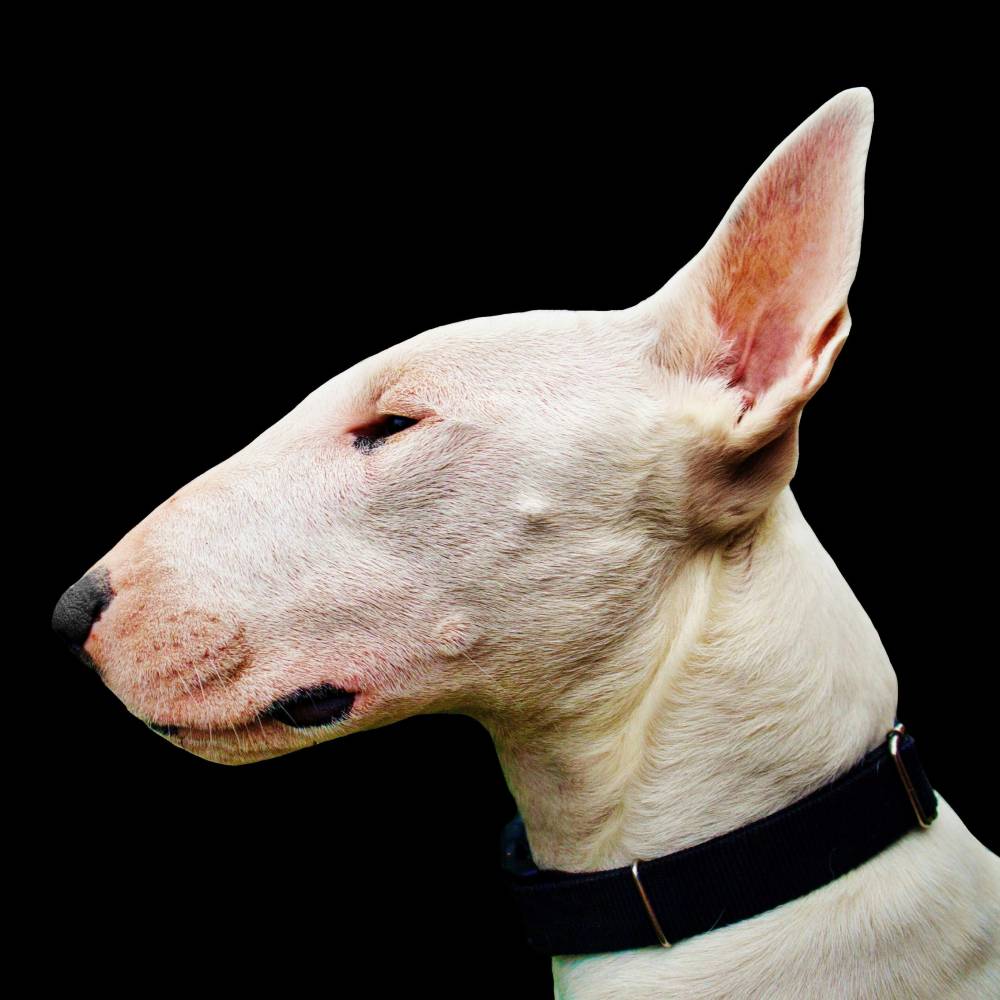
- Breed group: Terrier
- Life span: 10 – 14 years
- Weight: 20 – 36 kg (44 – 79 lbs)
- Height: 51 – 61 cm (20 – 24 in)
- Temperament: Playful, Courageous, Affectionate, Stubborn, Loyal
- Bred for: Bull baiting and later as a companion
- Origin: United Kingdom
Research Sources
All health data on this page is drawn from peer-reviewed veterinary studies and official registry references.
- Orthopedic Foundation for Animals (OFA). Cardiac Disease Statistics. https://www.ofa.org/diseases/cardiac-disease/
- De Risio L, Freeman J, Lewis T (2016). Prevalence, heritability and genetic correlations of congenital sensorineural deafness and coat pigmentation phenotype in the English bull terrier. BMC Veterinary Research, 12:146. https://doi.org/10.1186/s12917-016-0777-6
- Kennel Club/BSAVA Purebred Dog Health Survey for Bull Terriers. The Kennel Club / British Small Animal Veterinary Association Scientific Committee. https://www.thekennelclub.org.uk/breed-health/
Frequently Asked Questions
What are the most common health problems in Bull Terriers?
Bull Terriers are most significantly predisposed to cardiac disease, hereditary nephritis, atopic dermatitis, and congenital deafness. OFA data from 246 evaluations shows a 22% abnormal rate for advanced cardiac disease, ranking Bull Terriers first among all evaluated breeds. Hereditary nephritis — a progressive kidney disease — accounts for 11.5% of deaths in breed health surveys. Discuss your dog's individual risk with your veterinarian.
Why are Bull Terriers prone to heart problems?
Bull Terriers rank first among all breeds evaluated by the OFA for advanced cardiac disease, with a 22% abnormal or carrier rate based on 246 evaluations. Common conditions include mitral valve disease and aortic stenosis. Heart disease in Bull Terriers is often detected as a murmur during routine examination before any symptoms appear, making annual cardiac checks essential for the breed. Discuss your dog's individual risk with your veterinarian.
What is hereditary nephritis in Bull Terriers?
Hereditary nephritis is an inherited kidney disease caused by a defect on the X chromosome that damages the structure of the kidney's filtering membranes. It leads to progressive kidney failure and is one of the most serious long-term health concerns in the breed. Renal failure accounts for 11.5% of all reported Bull Terrier deaths, with a median age at diagnosis of approximately 3.5 years. Early detection through routine kidney function blood panels is important. Discuss your dog's individual risk with your veterinarian.
Are Bull Terriers prone to deafness?
Yes — congenital sensorineural deafness is a documented inherited condition in Bull Terriers, linked to coat pigmentation genes. It is present from birth and caused by degeneration of sensory hair cells in the inner ear. BAER testing at 6–8 weeks of age is the definitive diagnostic tool and should be requested for all Bull Terrier puppies. Affected dogs can live full lives with appropriate management and owner awareness. Discuss your dog's individual risk with your veterinarian.
How long do Bull Terriers live?
Bull Terriers typically live between 10 and 14 years. Managing predisposed conditions through proactive screening — including annual cardiac checks, routine kidney function panels, and BAER hearing tests for puppies — supports a better quality of life throughout their lifespan. Discuss your dog's individual risk with your veterinarian.
Get a personalised health forecast for your Bull Terrier based on age, sex, and lifestyle.
Run the Free Health Forecast