Pug Health Risks — What Every Owner Should Know
Pug health risks deserve early attention because this small brachycephalic companion breed carries several well-documented inherited and conformational disorders. Peer-reviewed and registry data identify major concerns including brachycephalic obstructive airway syndrome, developmental hip dysplasia, corneal ulcerative disease, obesity, and pug dog encephalitis. These findings do not mean every Pug will become ill, but they show where owners and veterinarians should focus screening, daily observation, and weight control from puppyhood onward. Pug health problems, Pug common diseases reported in those datasets, and the ages when each issue becomes most relevant are outlined below in a DVM-reviewed guide.
Most Common Health Conditions in Pugs
Brachycephalic Obstructive Airway Syndrome (BOAS)
Pugs carry the heaviest BOAS burden reported in the 2025 multi-breed cross-sectional study of brachycephalic dogs. Only 7% of examined Pugs were graded as unaffected, meaning 93% showed some degree of upper-airway obstruction. In practical terms, that makes noisy breathing, heat intolerance, exercise limitation, and sleep-disordered respiration core health issues for this breed from puppyhood onward.
Hip Dysplasia
Although Pugs are small dogs, OFA hip registry data shows an unusually severe developmental orthopedic burden in this breed. Across 1,266 Pug evaluations, 66% were classified as dysplastic, ranking the breed second highest of 218 breeds evaluated. Early signs can include bunny-hopping, hind-limb stiffness, reluctance to jump, and reduced tolerance for normal play.
Corneal Ulcerative Disease
Pugs are consistently the highest-risk breed for corneal ulceration in large primary-care datasets. UK VetCompass work reported 5.42% prevalence in Pugs, and the Australian VetCompass analysis reported a similar 5.5% prevalence. Their prominent eyes, shallow eye sockets, and reduced muzzle length make even mild drying or trauma more clinically important than many owners expect.
Obesity
Excess weight is common in Pugs and compounds the very problems that already limit comfort in this breed, especially airway effort and joint load. VetCompass Australia reported overweight or obesity in 20.2% of Pugs attending primary-care clinics. Because even modest weight gain can worsen BOAS signs and reduce mobility, body-condition monitoring matters throughout adult life.
Pug Dog Encephalitis (PDE / NME)
Pug dog encephalitis, also called necrotizing meningoencephalitis, is a breed-specific inflammatory brain disease that most often affects young adult Pugs, especially females. Population genetics data confirms a substantial NME risk-variant frequency in European Pugs, while clinical case series show median onset around 18 months. The concern is neurologic rather than orthopedic or respiratory: seizures, sudden behavioural change, circling, blindness, and rapid decline all warrant urgent attention.
Health Risks by Age for Pugs
Based on peer-reviewed evidence and official screening or registry-supported breed data.
| Age Range | Conditions to Watch | Why This Age Matters | Vet Action Recommended |
|---|---|---|---|
| 0–1 years | BOAS signs, corneal ulcerative disease | Airway crowding and exposed corneal surface can produce clinically important signs from puppyhood | Discuss noisy breathing, heat intolerance, squinting, redness, or excessive tearing as soon as they appear |
| 1–4 years | Hip dysplasia (developmental), pug dog encephalitis, ongoing BOAS burden | This is the main window for orthopedic detection and for many reported PDE cases | Orthopedic exam with imaging when indicated; urgent neurologic workup for seizures or abrupt behaviour change |
| 2–8 years | Obesity, chronic eye irritation or repeat ulcer risk | Body condition often drifts upward in adulthood, worsening both joint and airway comfort | Track body-condition score at routine visits and request eye assessment for any recurrent squinting or discharge |
| 8+ years | Chronic mobility limits, airway intolerance, senior monitoring of known risks | Ageing compounds the cumulative burden of earlier orthopedic, respiratory, and metabolic disease | Schedule senior wellness exams every 6 months with mobility, weight, respiratory, and eye review |
Symptoms to Watch For
Contact your veterinarian promptly if you notice any of the following signs in your Pug.
- Laboured breathing, louder snoring, heat intolerance, or stopping frequently on walks that may indicate BOAS.
- Squinting, pawing at the eye, redness, tearing, or a cloudy patch on the eye surface that may indicate corneal ulcerative disease.
- Bunny-hopping, hind-limb stiffness, reluctance to jump, or pain after activity that may indicate hip dysplasia.
- Seizures, sudden behavioural change, circling, loss of balance, or blindness that may indicate pug dog encephalitis.
- No visible waist, easy fatigue, or heavier breathing after mild exercise that may indicate obesity worsening other breed risks.
Pug Breed Profile
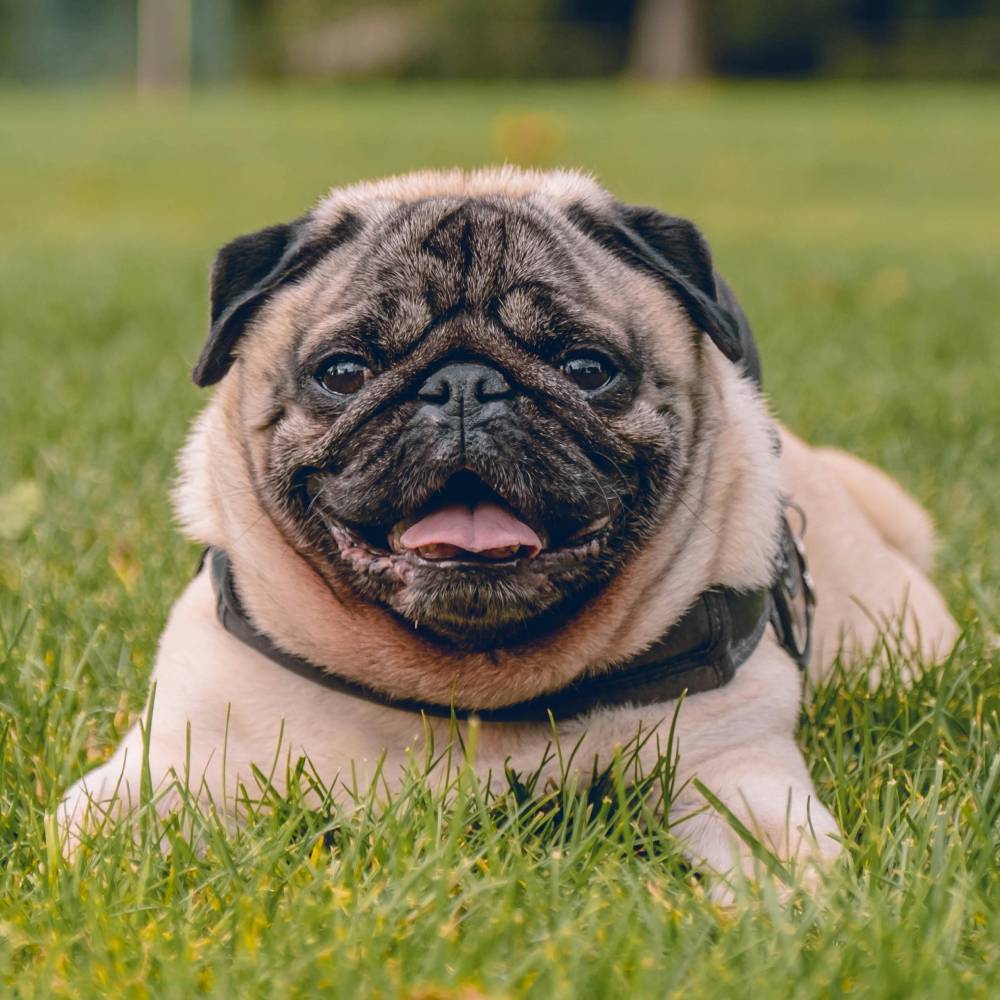
- Breed group: Toy
- Life span: 12 – 15 years
- Weight: 6 – 8 kg (14 – 18 lbs)
- Height: 25 – 33 cm (10 – 13 in)
- Temperament: Charming, Mischievous, Loving, Playful
- Bred for: Companion and lapdog
- Origin: China
Research Sources
All health data on this page is drawn from peer-reviewed veterinary studies and official registry datasets.
- Pohl et al. 2025 — PLOS ONE — BOAS cross-sectional study across 14 brachycephalic breeds.
- OFA Hip Dysplasia Statistics — Pug, 1,266 evaluations, Rank 2 — ofa.org/diseases/hip-dysplasia/
- O'Neill et al. 2017 — VetCompass — corneal ulcerative disease in dogs in England — PMC5471714.
- VetCompass Australia 2025 — Corneal disorders and obesity in Pugs — PMC11851709.
- Karkamo et al. 2024 — NME risk variant in European Pugs — PMC11150678.
Read our full guide: Hip Dysplasia in Dogs — What Every Owner Should Know
Frequently Asked Questions
How common is BOAS in Pugs?
Published cross-sectional BOAS data reports that 93% of Pugs show some degree of airway obstruction, leaving only a small minority clinically unaffected in the studied population. Discuss your dog's individual risk with your veterinarian.
Why are Pugs so prone to corneal ulcers?
Pugs have prominent eyes and reduced facial length, which leaves the cornea more exposed to drying and minor trauma. Primary-care studies in the UK and Australia report the highest corneal ulcer prevalence among the breeds evaluated. Discuss your dog's individual risk with your veterinarian.
What signs could suggest Pug dog encephalitis?
Seizures, sudden behavioural change, circling, loss of balance, blindness, and progressive depression are all neurologic signs that can be reported with pug dog encephalitis or necrotizing meningoencephalitis in this breed. Discuss your dog's individual risk with your veterinarian.
Get a personalised health forecast for your Pug based on age, sex, and lifestyle.
Run the Free Health Forecast