Bloodhound Health Problems: What Every Owner Should Know
Bloodhound health problems centre on gastric dilatation-volvulus, orthopaedic disease, and eye conditions shaped by this breed's deep chest, large frame, and characteristic loose facial skin. Research identifies Bloodhounds among the highest-risk breeds for GDV, with breed health surveys reporting it as the leading cause of death at 34.1% of all reported fatalities. Orthopedic Foundation for Animals data records a 26% abnormal hip dysplasia rate across 3,732 evaluations, ranking the breed 22nd among 147 evaluated breeds, while ACVO registry data documents entropion in roughly one in five examined dogs. Bloodhound common diseases cited below, and planning across Bloodhound lifespan, inform this veterinarian-reviewed BreedRisk guide.
Most Common Health Conditions in Bloodhounds
Gastric Dilatation-Volvulus
Gastric dilatation-volvulus (GDV), commonly called bloat, occurs when the stomach fills with gas and rotates on itself, cutting off blood supply to surrounding organs. It is a life-threatening emergency that can be fatal within hours if untreated. Glickman et al. (2000) identified Bloodhounds as among the highest-risk breeds for GDV, and Kennel Club/BSAVA Purebred Dog Health Survey data report GDV as the leading cause of death in the breed, accounting for 34.1% of all reported Bloodhound fatalities. Onset typically occurs between three and twelve years of age. Early signs include unproductive retching, a distended abdomen, restlessness, and rapid deterioration. Preventive gastropexy surgery can be discussed with your veterinarian for high-risk breeds.
Hip Dysplasia
Hip dysplasia develops when the hip joint forms abnormally, leading to looseness, cartilage wear, and progressive arthritis. OFA hip screening reports a 26% abnormal rate in Bloodhounds based on 3,732 evaluations, ranking the breed 22nd among 147 evaluated breeds. Signs typically emerge between one and four years of age and include stiffness after rest, reluctance to exercise, and a swaying or bunny-hopping gait. OFA certification radiographs at 24 months support early diagnosis and management before significant arthritis develops.
Entropion
Entropion is a condition where the eyelid rolls inward, causing eyelashes to rub against the eye surface and leading to chronic irritation, pain, and potential corneal ulceration. In Bloodhounds, entropion is caused by the weight and excess loose skin around the head and face — a characteristic feature of the breed. ACVO Blue Book data report a 21.1% prevalence based on 626 examinations (1993–2019), with 13.1% in the recent sample (2020–2024). Onset can occur from birth to two years of age. Signs include squinting, excessive tearing, eye redness, and pawing at the face. Surgical correction is generally very successful when performed early.
Elbow Dysplasia
Elbow dysplasia encompasses developmental abnormalities of the elbow joint that cause pain, lameness, and progressive arthritis. OFA elbow screening reports a 15% abnormal rate in Bloodhounds based on 1,914 evaluations — roughly one in seven tested dogs. Onset typically occurs between one and three years of age. Signs include forelimb lameness, stiffness after rest, and reluctance to exercise. Early radiographic evaluation and weight management improve long-term comfort and mobility.
Health Risks by Age for Bloodhounds
Based on GDV research, OFA screening data, and ACVO registry statistics cited on this page.
| Age Range | Conditions to Watch | Why This Age Matters | Vet Action Recommended |
|---|---|---|---|
| 0–2 years | Entropion; hip dysplasia (developmental); elbow dysplasia (developmental) | Excess facial skin predisposes to early eyelid rolling; rapid growth phase is when joint malformation is most detectable | Ophthalmic examination for eyelid conformation; wellness orthopaedic checks; maintain healthy weight during growth |
| 1–4 years | Hip dysplasia; elbow dysplasia | OFA data cluster orthopaedic abnormalities in early adulthood when lameness and gait changes become apparent | OFA hip and elbow radiographs at 24 months; weight management; avoid repetitive high-impact exercise if dysplasia confirmed |
| 3–12 years | Gastric dilatation-volvulus (GDV) | Deep-chested conformation places Bloodhounds at highest GDV risk throughout adulthood; breed surveys identify GDV as leading cause of death | Discuss gastropexy with your vet; feed smaller meals; avoid exercise immediately after eating; seek emergency care for bloat signs |
| 8+ years | Secondary arthritis; GDV; entropion complications | Cumulative joint wear; senior dogs remain at GDV risk; chronic corneal damage from untreated entropion affects vision and comfort | Senior wellness bloodwork; pain management for arthritis; quality-of-life assessment |
Symptoms to Watch For
Contact your veterinarian promptly if you notice any of the following signs in your Bloodhound.
- Unproductive retching or attempting to vomit without bringing anything up that may indicate gastric dilatation-volvulus — seek emergency care immediately.
- Visibly distended or bloated abdomen combined with restlessness, pacing, or signs of pain that may indicate GDV.
- Excessive drooling or salivation with rapid weakness or collapse that warrants same-day emergency veterinary assessment for bloat.
- Stiffness after rest, reluctance to exercise, or a swaying gait that may indicate hip dysplasia.
- Forelimb lameness or stiffness after rest in young adults that may indicate elbow dysplasia.
- Squinting, excessive tearing, eye redness, or pawing at the face that may indicate entropion.
- Visible inward rolling of the eyelid or chronic eye discharge that warrants ophthalmic examination for entropion.
Bloodhound Breed Profile
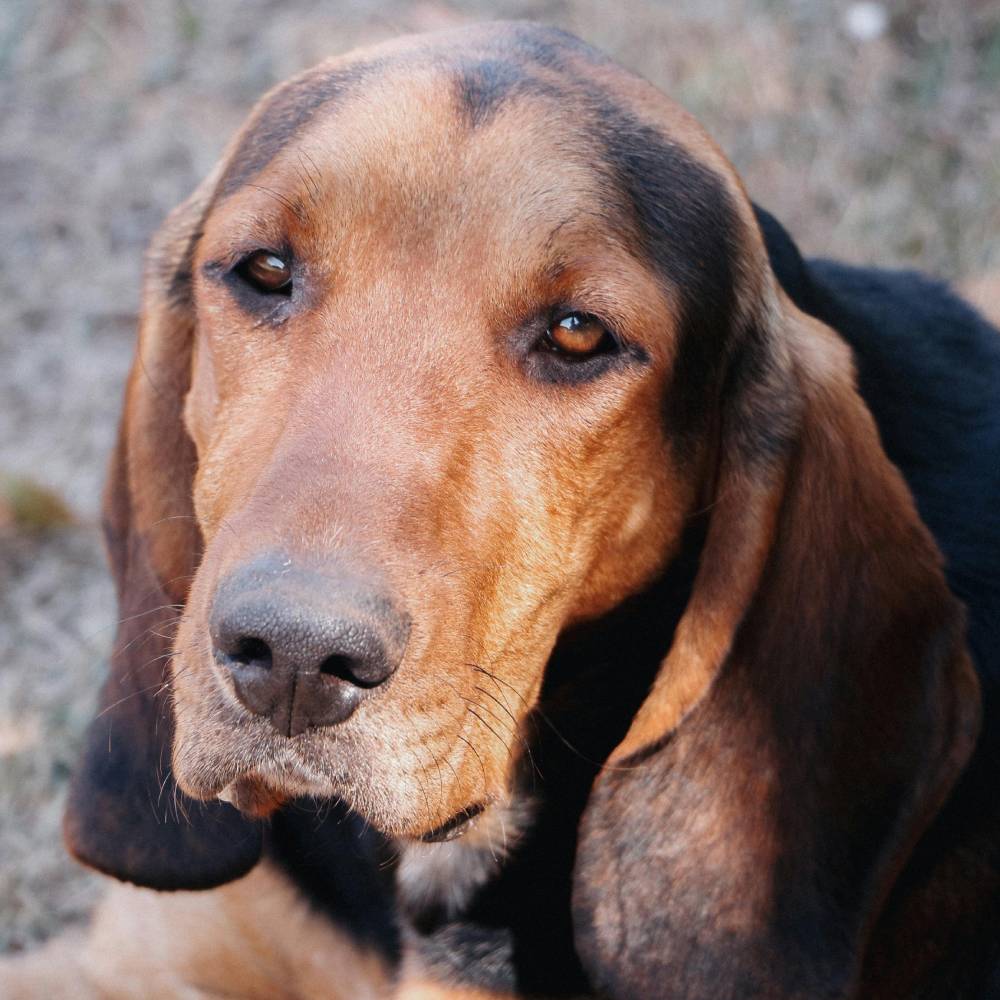
- Breed group: Hound
- Life span: 10 – 12 years
- Weight: 36 – 50 kg (79 – 110 lbs)
- Height: 58 – 69 cm (23 – 27 in)
- Temperament: Gentle, Affectionate, Stubborn, Independent, Even Tempered, Patient
- Bred for: Scent tracking and man trailing
- Origin: Belgium, United Kingdom
Research Sources
All health data on this page is drawn from peer-reviewed veterinary studies and official registry references.
- Glickman LT et al. (2000). Incidence of and breed-related risk factors for gastric dilatation-volvulus in dogs. JAVMA, 216(1):40–45. https://doi.org/10.2460/javma.2000.216.40
- Glickman LT et al. (2000). Non-dietary risk factors for gastric dilatation-volvulus in large and giant breed dogs. JAVMA, 217(10):1492–1499. https://doi.org/10.2460/javma.2000.217.1492
- Orthopedic Foundation for Animals (OFA). Hip Dysplasia Statistics. https://www.ofa.org/diseases/hip-dysplasia/
- ACVO & OFA. Ocular Disorders Presumed to be Inherited in Purebred Dogs (ACVO Blue Book). 2024. https://ofa.org/wp-content/uploads/2025/08/ACVO-Blue-Book-2024.pdf
- Orthopedic Foundation for Animals (OFA). Elbow Dysplasia Statistics. https://www.ofa.org/diseases/elbow-dysplasia/
Read our full guide: Hip Dysplasia in Dogs — What Every Owner Should Know
Frequently Asked Questions
What are the most common health problems in Bloodhounds?
Bloodhounds are most significantly predisposed to gastric dilatation-volvulus (GDV), hip dysplasia, entropion, and elbow dysplasia. GDV is the leading cause of death in the breed, accounting for 34.1% of all reported Bloodhound deaths in breed health surveys. Hip dysplasia affects around 26% of Bloodhounds evaluated by the OFA, ranking the breed 22nd among all evaluated breeds. Discuss your dog's individual risk with your veterinarian.
Why are Bloodhounds so prone to bloat?
Bloodhounds are deep-chested, large-breed dogs — the body conformation most strongly associated with GDV risk. Research identifies Bloodhounds as one of the highest-risk breeds for this condition. GDV occurs when the stomach fills with gas and rotates on itself, cutting off blood supply to surrounding organs. It is a life-threatening emergency requiring immediate veterinary attention. Preventive gastropexy surgery can significantly reduce the risk and is worth discussing with your vet. Discuss your dog's individual risk with your veterinarian.
Do Bloodhounds get hip dysplasia?
Yes — OFA data from 3,732 evaluations records a 26% abnormal rate for hip dysplasia in Bloodhounds, placing the breed 22nd among 147 evaluated breeds. Hip dysplasia is a developmental condition where the hip joint forms abnormally, leading to cartilage wear and progressive arthritis. Signs typically appear as the dog matures and include stiffness, reluctance to exercise, and a swaying gait. OFA certification is recommended at 24 months. Discuss your dog's individual risk with your veterinarian.
What is entropion in Bloodhounds?
Entropion is a condition where the eyelid rolls inward, causing eyelashes to rub against the eye surface. In Bloodhounds, it is caused by the weight and excess loose skin around the head and face — a characteristic feature of the breed. ACVO registry data shows a prevalence of 21.1% based on over 600 examinations. Signs include squinting, tearing, and eye redness. Surgical correction is generally very successful when performed early. Discuss your dog's individual risk with your veterinarian.
How long do Bloodhounds live?
Bloodhounds typically live between 10 and 12 years. Their predisposition to serious conditions such as GDV and hip dysplasia means that proactive management is essential — including feeding from a raised bowl, avoiding exercise immediately after meals, maintaining a healthy weight, and scheduling regular orthopaedic checks. Discuss your dog's individual risk with your veterinarian.
Get a personalised health forecast for your Bloodhound based on age, sex, and lifestyle.
Run the Free Health Forecast